




|
|
|













| On Debates, Gingrich Was Right |
 |
|
By Troy Senik
Thursday, October 11 2012 |
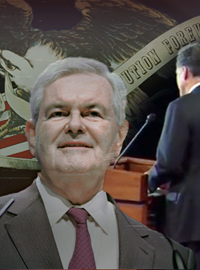
Desperately grasping for a rationale other than Barack Obama’s utter implosion as a public speaker after last week’s inaugural presidential debate, MSNBC’s Rachel Maddow took to the air in the moments after the scrimmage and called the result a draw, noting peevishly that the proceedings had spun out of control thanks to the absentee style of moderator Jim Lehrer. The sentiment was widespread among those desperate to change the subject from Obama’s rhetorical lockjaw. ABC News’ Dan Abrams said, “Regardless of who is winning this debate, Jim Lehrer is losing." The Daily Beast’s Michael Tomasky pronounced – with the imperiousness reserved for the truly powerless – "Definitely Lehrer's last debate." And really, isn’t it time to hang it up when judgment is pronounced upon you by a writer mediocre even by the standards of Tina Brown’s journalistic henchmen? Candor does compel us to admit that Lehrer – who, at 78, was moderating his 12th presidential debate – was a little rough around the edges. If you hadn’t known better, you would have thought that it had completely slipped his mind that he was hosting a debate that evening. Virtually every one of his questions was some variation on “explain the differences between the two of you,” a plea that might as well have been phrased “please do my job for me.” And there were indeed moments when he had a tough time cabining the candidates to the topic of the moment or enforcing time limits. But one factor should earn Lehrer a reprieve from such widespread criticism: It was one of the most substantive presidential debates in American history. Unlike many screen time-hungry moderators who unnecessarily interject themselves into the proceedings at every turn, Lehrer actually seemed to understand that the role of a good moderator is to set the table and get out of the way. When the public tunes into a presidential debate, they actually want to hear what the candidates have to say. And thanks to Lehrer’s laissez-faire approach, that’s exactly what they got. For 90 minutes, Romney and Obama crossed swords – at length and in-depth – on nearly all of the pressing issues of this campaign. And the moderator’s hands-off approach didn’t lead to the evening spinning out of control. The exchanges were utterly civil (the toughest jab was Romney elliptically comparing Obama to a teenager – hardly an example of campaign bloodsport) and, for all of the caterwauling about Lehrer losing control, the candidates got roughly equal time, with Obama actually speaking for slightly longer than Romney (a fact that makes it harder to pin the president’s failings on the moderator). If the biggest loser of the first debate was the president, then the biggest winner was Newt Gingrich. During his quixotic presidential bid, Gingrich – for whom grandiosity is a native tongue – repeatedly pledged that, if nominated, he would challenge President Obama to seven three-hour debates modeled off of the 1858 contests between Abraham Lincoln and Stephen Douglas – meaning they would consist of lengthy exchanges between the candidates with no moderator, only a timekeeper. Lehrer’s ‘seen but not heard’ moderation style brought the first Romney-Obama debate within hailing distance of the Gingrich model. And its success underscored the importance of the debates serving as a forum for sustained, serious disagreements on public policy rather than the sort of dueling press conferences that they so often devolve into. The regnant criticisms of political debate in the new media era have the potential to be defused by this long-form approach. Is the problem that viewers self-select news coverage, only exposing themselves to ideologically sympathetic outlets? Then utilize a format where partisan differences can be fleshed out in depth, with neither side able to escape the counterarguments from across the aisle. Is the problem that sound bite coverage leaves the public with only a superficial understanding of even the most complex issues? Then create a setting in which arguments must be sustained over long periods of time, leaving style unable to triumph over substance. There’s a growing realization that the issues facing the nation can’t be adequately addressed in two-minute windows and that the democratic process has been cheapened when candidates are simply asked to raise their hands on stage to indicate their positions on potential pieces of federal legislation. Far from being condemned, Jim Lehrer should be praised for demonstrating that there is an alternate method – one that relies on treating candidates for the highest office in the land as adults capable of speaking in full paragraphs. And Newt Gingrich deserves his share of credit too for arguing that citizens of the most advanced republic in the history of the world deserve something more from those who would aspire to lead them. |
Related Articles : |
