|
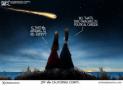
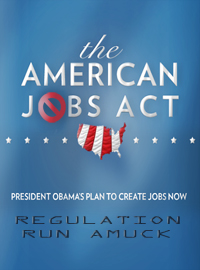
In an atmosphere where private industry is already racked by uncertainty, the American Jobs Act now adds the prospect of additional litigation and regulatory harassment to the mix. In essence, Obama’s plan to stimulate hiring would drive the costs of hiring up.
|
|
| Barack Obama has no excuse. The president thought that the American Jobs Act – his latest proposal for stimulus by any other name – was such an essential piece of legislation that he insisted on introducing it to the nation via a 33-minute speech to a joint session of Congress earlier this month. That should have been more than enough time to unveil all of the salient aspects of the plan. Yet as the bill has begun to undergo closer scrutiny, a key detail – and one left out of Obama’s speech – has leaked out.
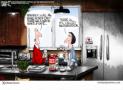
Obama’s proposal includes a provision, found in Section 371, stating “Congress finds that denial of employment opportunities to individuals because of their status as unemployed is discriminatory and burdens commerce” by “reducing personal consumption and undermining economic stability.” The provision prohibits employers from excluding applicants based on the fact of their unemployment and proposes to enforce the law through fines of up to $1,000 per day.
There’s good reason that the president chose not to tout the “unemployment discrimination” initiative in the bill: It would have been ridiculed by anyone with a feeling for how employment decisions are made in the real world.
Like nearly every economic policy proposal out of the White House, this scheme is built on the triumph of good intentions over even the most facile understanding of the doctrine of unintended consequences. Where it is not superfluous, it is burdensome. And where it is not burdensome, it is superfluous.
Let’s start with this proposal’s standing as a solution in search of a problem. It’s all too easy to forget that the unemployed actually may have a few competitive advantages when it comes to a job search. Because they are not currently tethered to a job, employers can pursue them with greater certainty that they are not merely “browsing” and will turn down the position when it is actually offered to them.
The same standard applies with salary; the unemployed will, on average, accept jobs at lower wages than those who are making a lateral move from another position. That may sound like cold comfort, but some job is better than none and lower wages may lead to more hiring by employers wary of investing too much in the labor force during uncertain times. The only thing that can upset this equation is if those receiving unemployment benefits decide that it’s better to make less money while exerting no effort – a problem of Washington’s making.
Of course, the unemployed may find themselves at a disadvantage because their skills have atrophied during their time out of the labor force. This is unfortunate – and should be remedied by tying unemployment benefits to job training – but far from grounds for a discrimination suit. Lest we forget, employers hire individuals to perform tasks that are perceived to be of worth equal to or greater than the wages they’re paying. It doesn’t make any sense to punish them for refusing to hire individuals whose work wouldn’t meet that standard.
This proposal would be bad enough if it were merely extraneous. But its ramifications run much deeper. Threatening business with the cudgel of steep fines will persuade them to stay away from the hiring market even longer, shifting work responsibilities to existing employees or eliminating them entirely through automation. In an atmosphere where private industry is already racked by uncertainty, the American Jobs Act now adds the prospect of additional litigation and regulatory harassment to the mix. In essence, Obama’s plan to stimulate hiring would drive the costs of hiring up.
The policy deficiencies of this proposal stem from a broader philosophical disconnect. In the fevered imagination of this bill’s author, employers sit in dimly lit rooms chomping cigars and trying to figure out how to further turn the screws on the disadvantaged. In the cold light of day, however, the reality is considerably simpler. Employers look for the hires that will do the most to improve their bottom line. Whether those individuals are currently employed or not is – all other things held equal – immaterial.
The president’s concern for the unemployed is no doubt sincere. That’s why it’s such a shame that his proposal will only make their hardships more severe.
|