




|
|
|
















03 August 2012
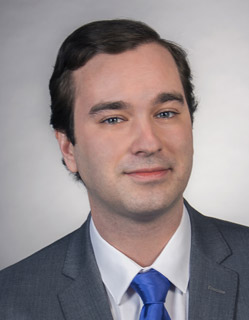
Competitive Enterprise Institute Transportation Analyst Marc Scribner discusses the legal challenge to compel the Transportation Security Administration to comply with a year-old court order to give the public an opportunity to comment on the agency's use of full-body scanners on airports.
0:00
0:00
Related Podcasts

24 October 2024
Phil Kerpen, President of American Commitment, discusses a recently filed lawsuit seeking emails on why the American Academy of Pediatrics backtracked in 2020 on supporting schools reopening in the fall of 2020, the role of the teachers unions, and the potential political motivation behind the reversal.
15 June 2023
Timothy Lee, CFIF's Senior Vice President of Legal and Public Affairs, discusses how the U.S. Supreme Court's recent Glacier National decision provides some good news for employers, and what it would mean for innovation in America if non-compete clauses are deemed to violate the National Labor Relations Act.

18 February 2022
Amy Swearer, Legal Fellow in the Edwin Meese Center for Legal & Judicial Studies at The Heritage Foundation, discusses how armed citizens make situations safer as evidenced on the defensive gun use database available at heritage.org, the state of onerous gun restrictions around the country, and the current case before the Supreme Court regarding a citizen's right versus privilege “to bear arms."

25 May 2018
Richard A. Samp, Chief Counsel at the Washington Legal Foundation, discusses the West Virginia Supreme Court of Appeals' decision to reject a novel theory of liability that would have held pharmaceutical manufacturers liable for injuries allegedly caused by drugs they neither manufactured nor sold.
02 February 2018
Tommy Binion, Director of Congressional and Executive Branch Relations at The Heritage Foundation, discusses the history of the State of the Union address, a president's goals for the speech, and the implications of providing the opposition response.

12 February 2016
In an interview with CFIF, Bradley A. Smith, Chairman and Founder of the Center for Competitive Politics and Former Chairman of the FEC, discusses campaign finance law 40 years after the Supreme Court's seminal decision in Buckley v Valeo and why "big money" isn't buying this election.
