| Iran Stronger Under Trump than Under Biden or Obama? Please |
 |
|
By Timothy H. Lee
Thursday, May 28 2026 |
| |
|
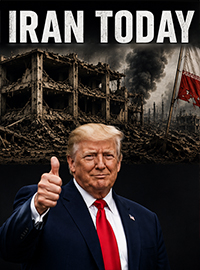
Pardon the arguably crude rhetoric, but who would be stupid enough to suggest that Iran is somehow in a stronger place than it was three months ago before the United States and Israel commenced their coordinated military campaign against it? Ladies and gentlemen, Representative Seth Moulton (D – Massachusetts). Sadly, he represents many in his party. These are people like Joe Biden, who said in 2019 that President Trump’s order to kill Iranian general Qasem Soleimani amounted to “a stick of dynamite into a tinderbox” and would likely trigger war. Well, war awaited, but in the form of Hamas’s October 7, 2023, assault on Israel for which he bears some blame. In any event, after our military campaign and President Trump’s renewed hardline posture, Iran today is dramatically weaker than under Barack Obama and Joe Biden. Its very head of state has been killed, its military leadership decimated, strategic infrastructure wrecked, proxy networks battered and its economy slowly suffocating from ongoing sanctions and blockades. That’s a much worse predicament than during twelve years of appeasement under Obama and Biden. Under Obama’s 2015 Iran nuclear deal, Iran received extensive sanctions relief and regained access to international oil markets. Consequently, its oil exports surged above two million barrels per day, generating tens of billions of dollars annually for the regime. Critics like Israeli Prime Minister Benjamin Netanyahu warned at the time that wouldn’t moderate Iran’s behavior, but instead finance terrorism and regional aggression. That is precisely what happened. Iran increased support for Hamas, Hezbollah and other militant groups across the Middle East while simultaneously advancing missile and nuclear development. Rather than becoming a more responsible international actor, the regime became richer and more aggressive. President Trump reversed course during his first term through his “Maximum Pressure” sanctions campaign. After the U.S. withdrew from Obama’s appeasement deal in 2018, Iranian oil exports collapsed, from roughly 2.5 million barrels per day to approximately 350,000 barrels daily. The financial consequences for Tehran were similarly severe. Iranian currency cratered, domestic unrest intensified and the regime’s revenues shrank dramatically. Over that period, Iran’s defense budget consequently fell roughly 25% at the height of Trump’s sanctions campaign. Then came Joe Biden. His administration significantly relaxed sanctions enforcement, particularly regarding oil exports to China. Iranian exports rebounded sharply, climbing back above 1.5 million barrels per day and generating approximately $53 billion in oil revenue by 2023, up from roughly $16 billion in 2020. Once again, the results were entirely foreseeable. Namely, Iran resumed financing terrorist proxies at higher levels while continuing nuclear advancement. Hamas and Hezbollah grew stronger financially and militarily during the very years that Washington relaxed pressure on Tehran. The bizarre notion that sanctions relief would somehow produce moderation proved as naïve the second time under Biden as it did the first time under Obama. Now contrast Iran’s current state. It’s reeling from political decapitation, military leadership elimination, infrastructure degradation and oil export and commercial shipment curtailment. President Trump’s strength produced weakness in Tehran, while Obama-Biden appeasement produced Iranian and Hamas strength. Critics nevertheless point to current gasoline prices and inflation as evidence that confronting Iran is too costly, but that argument constitutes recent historical amnesia. Although gas prices have temporarily risen due to the conflict and fears regarding the Strait of Hormuz, today’s national average stands at approximately $4.46 per gallon. Recall, however, that Americans endured gasoline prices exceeding $5 per gallon nationally during Biden’s presidency. Specifically, the American Automobile Association (AAA) recorded an all-time national average high of $5.01 per gallon that summer. More broadly, Biden era inflation was not merely a temporary geopolitical spike tied to a specific overseas conflict. Rather, under his leadership inflation proved prolonged and systemic, peaking at 9% in June 2022, the highest inflation rate in roughly four decades. Today, in contrast, elevated energy prices result directly from a specific Middle East conflict involving one of the world’s major oil-producing regions. Even now, however, overall inflation remains well below the disastrous Biden-era peak. Accordingly, the Obama-Biden years of accommodation coincided with a richer Iran, stronger terrorist proxies and accelerating nuclear ambitions. Trump’s years of maximum pressure, in contrast, weakened the regime financially and strategically. Iran was not strengthened by sanctions, military deterrence and economic isolation. It was strengthened by the absence of them. |