








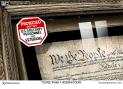














| As Attacks Intensify, Trump Becomes More Popular |
 |
|
By Byron York
Wednesday, October 23 2024 |
It's hard to measure the intensity of negative media coverage of former President Donald Trump, but it's safe to say it's rising as Election Day approaches. What's interesting to note is that in the face of unrelentingly negative coverage – at a high level now, but negative for a long time – the public views Trump more favorably than it has since he entered politics. Asking voters whether they have a favorable or unfavorable opinion of a politician is a staple of polling. The politician is referred to as being underwater if his unfavorable rating is higher than his favorable rating. When it comes to favorability, Trump has been underwater forever. On this date in 2016, Trump's unfavorable rating exceeded his favorable rating by 26 points, according to the RealClearPolitics average of polls. That is huge. But, of course, Trump was elected president a short time later, indicating that favorable ratings are not everything. On this date in 2020, Trump, after four years as president, had gotten more popular. But he was still underwater; his unfavorable rating exceeded his favorable rating by 11 points. Even though that was significantly better than four years earlier, he narrowly lost his bid for reelection. Now, less than three weeks before Election Day, Trump's unfavorable rating exceeds his favorable rating by just seven points. "If you believe that Donald Trump has somehow become less popular over time, let me change your mind about that," CNN analyst Harry Enten said recently. "In fact, he is more popular at this point in the campaign than he was at this point in the 2020 campaign or the 2016 campaign." What about his opponent? Vice President Kamala Harris has been on an entirely different trajectory than Trump, and it is not good news for her. The public viewed her favorably for her first six months as vice president. And then, when the inflation, border chaos and other results of the Biden-Harris administration began to kick in, Harris sank underwater. Quickly. By January 2022, when she had been in office a year, Harris' unfavorable rating exceeded her favorable rating by 14 points, again according to the RealClearPolitics average of polls. By the start of this election year, January 2024, she was 20 points underwater. On July 21, the day President Joe Biden withdrew from the race, Harris was 14 points underwater. And then – whoosh! With the feeble and senescent Biden out of the reelection picture, Democratic enthusiasm and Harris' favorability soared. By late September, she was actually above water, albeit by a single percentage point. That was a big jump from having been 14 points underwater. But now Harris' progress has stopped. She has slipped back underwater by a single point. "The momentum of Kamala Harris has stalled," Enten said. Her top aides "feel like they have to change something that's going on in their campaign because they were seeing a rise, and now it has stalled out." That obviously does not mean Harris will lose; Trump himself has proven that an underwater candidate can win. And Trump is farther underwater than Harris. But the trend for Trump is up, and the trend for Harris is down. Meanwhile, what is extraordinary is Trump's ability to improve his favorability rating in the face of relentlessly hostile media coverage. Back in August, at the end of Harris' first month of campaigning, the conservative Media Research Center found that Harris' media coverage had been 84% positive, higher than another other major party nominee ever, while Trump's media coverage was 89% negative. Against a headwind like that, Trump's improvement in favorability is remarkable. So is there a cause and effect here? It's entirely possible that wildly negative media coverage is actually causing many Americans to view Trump more favorably. After all, the media is one of the least-trusted institutions in American public life, and if top media figures say something, millions of Americans are likely to believe the opposite. It's hard to see Trump-bashing as helping Trump, but that might be what is going on. Byron York is chief political correspondent for The Washington Examiner. COPYRIGHT 2024 BYRON YORK |

Related Articles : |
