| |
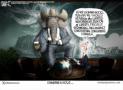
On the Super-Committee and Defense Spending: |
|
| |
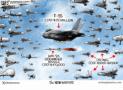
"We shouldn't gut defense. A central question of our budget debates is how much we allow growing social spending to crowd out the military and, in effect, force the United States into a dangerous, slow-motion disarmament. ...
"Defense spending is unlike other spending, because protecting the nation is government's first job. It's in the Constitution, as highways, school lunches and Social Security are not. We should spend as much as needed, but that amount is never clear. Even in the Cold War, when the Soviet Union's capabilities were intensively analyzed, there was no scientific and exact number. ...
"By itself, defense spending doesn't ensure that our national power will be wisely or effectively deployed. This depends on our civilian and military leaders. But squeezing defense will limit their choices and expose U.S. troops to greater risk. Those who advocate deep cuts need to specify which goals -- combating cyber warfare, countering China, fighting terrorism -- should be curtailed." |
|
| |
— Robert J. Samuelson, Newsweek and Washington Post Contributing Editor
|
|
|
— Robert J. Samuelson, Newsweek and Washington Post Contributing Editor
|
|
Posted October 31, 2011 • 08:00 AM
|
|
|
| |
On Dodging Economic Armageddon: |
|
| |
"The world economy has once again dodged Armageddon. The European Union finally forged a Greek bond deal, and a rescue fund big enough to ring-fence banks and sovereign debt, in order to avoid a catastrophic, Lehman-like contagion event. At the same time, the U.S. economy moved away from the threat of recession with a third-quarter real gross domestic product report of 2.5 percent. In response, stocks are soaring. We'll live to see another day. ...
"If only Washington would quit tampering with our free-market economy, and if only the president would see that the American economic system is supposed to reward success, not punish it, the animal spirits would recover and we'd double the economic growth rate. Unemployment would come way down in the process." |
|
| |
— Larry Kudlow, Economist, Economic Commentator and Host of CNBC's ‘Kudlow Report’
|
|
|
— Larry Kudlow, Economist, Economic Commentator and Host of CNBC's ‘Kudlow Report’
|
|
Posted October 28, 2011 • 08:04 AM
|
|
|
| |
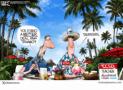
On College Tuition and the President's Student Loan Relief Program: |
|
| |
"Since 1985, college costs have risen more than 450 percent, which is about 4.5 times the rate of inflation. There is no justification for higher-education costs to have soared so dramatically. Faculty salaries have increased in most cases, but at only about a 10th of the rate of overall growth. Colleges and universities cite a variety of other factors, such as higher administrative costs and overhead, but these claims are unconvincing. The real reason schools charge more is because they can get away with it. ...
"The higher-education establishment has no incentive to control costs so long as government continues to make it easy for students to get into debt and then have it forgiven. Mr. Obama would have us believe this racket can continue at no cost to the taxpayer. You don’t need a college degree to see through that one." |
|
| |
— The Editors, The Washington Times
|
|
|
— The Editors, The Washington Times
|
|
Posted October 27, 2011 • 08:07 AM
|
|
|
| |
On the President's Zero-Sum Logic: |
|
| |
"The President has been talking a lot about math lately. He’s been saying that, quote, 'If we’re not willing to ask those who’ve done extraordinarily well to help America close the deficit… the math says… we’ve got to put the entire burden on the middle class and the poor.'
"This is really a stunning assertion from the President. When you look at the actual math, you quickly realize that the way out of this mess is to combine economic growth with reasonable, responsible spending restraint. Yet neither of these things factors into the President’s zero-sum logic." |
|
| |
— Congressman Paul Ryan (R-WI), House Budget Committee Chairman, in a planned October 26, 2011 Heritage Foundation Speech
|
|
|
— Congressman Paul Ryan (R-WI), House Budget Committee Chairman, in a planned October 26, 2011 Heritage Foundation Speech
|
|
Posted October 26, 2011 • 08:12 AM
|
|
|
| |
On Small-Business Owners' Concerns Over Government Regulations: |
|
| |
"PRINCETON, NJ -- Small-business owners in the United States are most likely to say complying with government regulations (22%) is the most important problem facing them today, followed by consumer confidence in the economy (15%) and lack of consumer demand (12%).
Rounding out small-business owners' top five problems in the Oct. 3-6 Wells Fargo/Gallup Small Business Index poll is lack of credit at 10% and poor leadership by government and the president at 9%." |
|
| |
— Wells Fargo/Gallup Small Business Index Poll (October 3-6, 2011)
|
|
|
— Wells Fargo/Gallup Small Business Index Poll (October 3-6, 2011)
|
|
Posted October 25, 2011 • 08:00 AM
|
|
|
| |
On the Importance of Compromise in Tax Reform Legislation: |
|
| |
"Congress's Joint Select Committee on Deficit Reduction is struggling to find $1.5 trillion in cuts over the next 10 years. This is a unique opportunity to use tax reform to reduce future budget deficits while lowering individual tax rates.
"The Tax Reform Act of 1986, enacted 25 years ago last Friday, showed how a tax reform that includes lower rates can change incentives in a way that grows the tax base and produces extra revenue. The 1986 agreement between President Ronald Reagan and House Speaker Tip O'Neill reduced the top marginal tax rate to 28% from 50%. A conservative Republican and a liberal Democrat could agree to a dramatic reduction in top rates because the legislation also eliminated a wide variety of tax loopholes." |
|
| |
— Martin Feldstein, Harvard Professor, Wall Street Journal Contributor and Former Council of Economic Advisers Chairman
|
|
|
— Martin Feldstein, Harvard Professor, Wall Street Journal Contributor and Former Council of Economic Advisers Chairman
|
|
Posted October 24, 2011 • 08:13 AM
|
|
|
| |
On President Obama's and Vice President Biden's Posture On Jobs and Reckless Gov't Spending: |
|
| |
"What are we to think about a president and vice president who blow nearly a trillion dollars in borrowed money, accept no responsibility for it and then traverse the nation trying to convince Americans that if we don't spend half that much again, people will die from dilapidated bridges and women will be raped because we can't afford cops?
"What business do these two have lecturing anyone about anything, much less the conditions that might ensue if we were not to spend more printed money to pay for things they failed to finance the first time because they misappropriated the funds? ...
"It's time these two answered some questions themselves about the colossal waste of federal money they've directed toward the stimulus package, Obamacare, Solyndra, other green projects and scores of other boondoggles.
"Until they can give us an honest accounting for their recklessness, they have no standing to be demanding more." |
|
| |
— David Limbaugh, Author and Columnist
|
|
|
— David Limbaugh, Author and Columnist
|
|
Posted October 21, 2011 • 09:05 AM
|
|
|
| |
On the Lack of Obama Signs Among the "Occupy Wall Street" Crowd: |
|
| |
"The Occupy Wall Street folks tell us to blame Wall Street for the nation's financial troubles. Notice the no-fly zone over President Barack Obama. Where are the anti-President Barack Obama signs or the verbal chants denouncing the President? Imagine the protests/sit-ins/rallies/mass marches on Pennsylvania Avenue -- not Wall Street -- if after two years of Republican White House leadership, America remained stuck on over 9 percent unemployment!" |
|
| |
— Larry Elder, Syndicated Columnist and Radio Talk-Show Host
|
|
|
— Larry Elder, Syndicated Columnist and Radio Talk-Show Host
|
|
Posted October 20, 2011 • 08:15 AM
|
|
|
| |
On a Record-Setting Spending Year: |
|
| |
"Maybe it's a sign of the tumultuous times, but the federal government recently wrapped up its biggest spending year, and its second biggest annual budget deficit, and almost nobody noticed. Is it rude to mention this? ...
"The Obama years have racked up the three largest deficits, both in absolute amounts and as a share of GDP, since Hitler still terrorized Europe. Some increase in deficits was inevitable given the recession, but to have deficits of nearly $1.3 trillion two years into a purported economic recovery simply hasn't happened in modern U.S. history. Yet President Obama fiercely resisted even the token spending cuts for fiscal 2011 pressed by House Republicans earlier this year." |
|
| |
— The Editors, The Wall Street Journal
|
|
|
— The Editors, The Wall Street Journal
|
|
Posted October 19, 2011 • 07:52 AM
|
|
|
| |
On Polling the "Occupy Wall Street" Protesters: |
|
| |
"President Obama and the Democratic leadership are making a critical error in embracing the Occupy Wall Street movement — and it may cost them the 2012 election. ...
"The protesters have a distinct ideology and are bound by a deep commitment to radical left-wing policies. On Oct. 10 and 11, Arielle Alter Confino, a senior researcher at my polling firm, interviewed nearly 200 protesters in New York's Zuccotti Park. Our findings probably represent the first systematic random sample of Occupy Wall Street opinion.
"Our research shows clearly that the movement doesn't represent unemployed America and is not ideologically diverse. Rather, it comprises an unrepresentative segment of the electorate that believes in radical redistribution of wealth, civil disobedience and, in some instances, violence. Half (52%) have participated in a political movement before, virtually all (98%) say they would support civil disobedience to achieve their goals, and nearly one-third (31%) would support violence to advance their agenda." |
|
| |
— Douglas Schoen, Political Analyst, Pollster and Penn, Schoen & Berland Founding Partner
|
|
|
— Douglas Schoen, Political Analyst, Pollster and Penn, Schoen & Berland Founding Partner
|
|
Posted October 18, 2011 • 08:07 AM
|
|
|
|