





America as we know it was built largely upon and because of our rail industry, and today it remains…
CFIF on X CFIF on YouTube
So-Called "Railway Safety Act" Constitutes a Political Handout to Big Labor That Does Nothing to Improve Safety At All

America as we know it was built largely upon and because of our rail industry, and today it remains a pillar of our economy.

Unfortunately, a destructive proposal before Congress misleadingly named the "Railway Safety Act" (RSA), part of broader surface transportation reauthorization, threatens great harm to our railroads.

Simply put, the bill has nothing to do with improving safety, but has a lot to do with advancing the political agenda of Big Labor.  At a moment when inflation burdens American families and fragile supply chains remain vulnerable to disruption, the last thing our economy or rail sector need is another costly federal mandate imposed upon one of the nation’s most important transportation sectors.

As an initial matter, as noted by The Wall Street Journal, the…[more]

May 20, 2026 • 04:28 PM
James Madison Saw Abigail Spanberger Coming
By David Harsanyi
Friday, April 24 2026
During the national debates of 1788, the great Virginian James Madison worried that mere "parchment barriers," or constitutions, wouldn't be enough to stop an "overbearing majority" from seeking power and stripping minorities of their voice and rights. What he envisioned, in other words, was someone like Abigail Spanberger. The governor recently signed a bill making Virginia the 18th state to join the National Popular Vote Interstate Compact, a scheme to circumvent the Constitution and award all electoral votes to the presidential ticket with the highest national vote total…
 
Unanimous Supreme Court and Congressional “Stop Climate Shakedowns Act” Jointly Target Abusive Climate Litigation
Lawsuit abuse remains among the most dangerous but underrecognized threats to the American economy and…
Read more...
Trump's Frustration and Iran's Delaying Tactics
If anyone knows that President Donald Trump, for all his bluster, can mean what he says, it is the Iranians.…
Read more...
 
Lawyers Sue for Higher Prices
You aren't going to believe the latest lawsuit fad in America: suing companies as monopoistic for cutting prices…
Read more...
CFIF Endorses the “Stop Climate Shakedowns Act” to Protect American Energy and Curb Abusive Litigation
WASHINGTON, D.C. – The Center for Individual Freedom (CFIF) today announced its strong support…
Read more...
 
Hey, Socialists, We've Already Figured Out the Supermarket
There are at least 76,000 supermarkets in the United States. Most of us probably have a dozen within…
Read more...
Even Pew and The Washington Post Admit: Wealthier Americans Pay More Than Their “Fair Share”
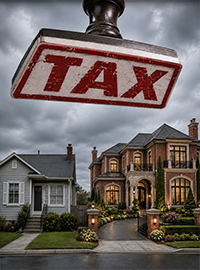
April 15 Tax Day arrived this week, and with it a widespread reminder that transcends our otherwise polarized…
Read more...
 
Debunking Five Tax Day Myths
Every April, Americans spend more than 7 billion hours filing taxes and roughly the same amount of time…
Read more...
JD Vance's Hard Road to 2028
Vice President JD Vance faced an impossible task trying to negotiate an end to the U.S.-Israeli war against…
Read more...
 
Price Controls Will Deny Millions of Americans Credit Cards
There's a famous scene in the movie "The Graduate" in which a young Dustin Hoffman receives…
Read more...
CFIF Commends the Tennessee House of Representatives for Passing Significant Certificate-of-Need (CON) Reform Legislation
 Bill Will Repeal CON Laws for Acute Care Hospitals and Other Critical Services  NASHVILLE…
Read more...
Notable Quote   
 
"The doomer case against the Trump economy isn't imaginary. It's built on real price pain, real anger and real political ammunition. ...Yet the strongest broad economic numbers point in a different direction.The Trump economy is expensive, uneven and politically vulnerable. It is also much stronger than the doomer story allows.The broadest case against the collapse narrative starts with real GDP per…[more]
 
 
— Newsweek Editors
 
Liberty Poll   

In a time of growing national economic stress, should the Artemis moon missions, expected to ultimately cost taxpayers more than $100 billion, be continued or postponed?