




|
|
|

















| Jobs for Us or Jobs Being Done On Us? |
 |
|
By Ashton Ellis
Tuesday, December 08 2009 |
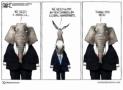
If you are like most Americans, you probably did not hear about the Obama Administration’s “jobs summit” last Thursday until you got home that night, if at all. That’s what happens when the government schedules a meeting about how to create jobs during normal business hours. The only folks able to attend are those that can afford to take a day off for photo ops at the White House. Such people include representatives for labor unions, recipients of corporate welfare, academics and consultants. Not exactly a good sampling of the real job creators: entrepreneurs of new and growing businesses. As a recent study by the Kauffman Foundation explains, the primary source of new jobs comes from companies less than five years old. As a business expands to reach clients and capital, it hires people who can boost production and earnings. But before an entrepreneur will take the risks necessary to start creating jobs, he needs to have some degree of certainty about the price of doing business. If the government is truly interested in finding ways to spur job creation, the best signals it can send are those that indicate a rational and stable – or better yet, reduced – regulatory environment. Of course, that’s not the theme Democrats are sounding. Instead, liberals in Congress and the White House are proposing a raft of one-time hiring incentives, make-work “infrastructure” projects and temporary tax deductions. One example is an idea to pay employers $3,000 for every new hire. The idea isn’t new. It was considered and rejected for inclusion in the previous stimulus package because someone correctly pointed out that all employers need to do to collect the subsidy is fire and re-hire the same workers. Factor in the transactions costs of lost time filling out paperwork, and it would be cheaper to just cut a per capita check to every employer. At least then the Obama Administration could credibly claim to have “saved” a quantifiable number of jobs. By now, everyone knows the corruption seemingly inherent in congressionally-directed funding of local projects. To be sure, America needs improvements to infrastructure like roads, ports and the electricity grid to grease the wheels of commerce. But the logic of congressional appropriations dictates that priority goes to districts with the most powerful congressmen, not those with the most need. Thus, while public works monuments to Robert Byrd are constructed in rural West Virginia, California’s Inland Empire is rendered immobile from the lack of grade separation. As bad as these measures are, the worst is calling for temporary tax deductions. Like the others, it rewards behavior that would not be done otherwise, and most likely will not be repeated unless the deduction is extended. Rewarding an act one year and penalizing it the next is the definition of irrational. Yet that is precisely the case when the deduction terms out. In addition, the only businesses able to benefit from such policies are those with deep enough pockets to employ top-dollar accountants. Which incidentally, are not typically “new” businesses like the kind necessary to create real, sustainable jobs. Though these kinds of gimmicks are sure to please the groups attending the summit, they do nothing to create certainty for employers or stability for workers. All of this highlights the fact that President Obama and his Democratic colleagues in Congress are missing the point on the shrinking job market. For many private entities, the biggest problem in today’s economy is not inadequate access to capital or a lack of qualified people to employ. It is deep uncertainty about what the government will regulate, tax or takeover next. With the drop in consumption leading to a slowdown in growth, businesses are hedging against new compliance costs by hoarding money. In an era of industry nationalizations disguised as bailouts and “reforms” that will federalize health care and energy consumption, building up a rainy day fund is less about insuring against self-inflicted mistakes. It is now almost exclusively about creating a reserve to replace money soon to be confiscated by new taxes, regulations and/or inflation. If President Obama is serious about creating sustainable, stable jobs he should pick up a copy of Henry Hazlitt’s “Economics in One Lesson.” Since he’s a busy guy, he can flip to the one-sentence summary in the first chapter. “The art of economics consists in looking not merely at the immediate but at the longer effects of any act or policy; it consists in tracing the consequences of that policy not merely for one group but for all groups.” In this case, what’s good for new, job-creating businesses is good for every other type of employer and would-be employee. Make the cost of doing business as straightforward as possible. Eliminate the need for tax consultants, lobbyists and other rent-seekers that divert resources away from economically productive uses. Regulations should be rational, and complying with the law should be clear. The only way President Obama can stimulate the kind of wealth creation necessary to support his domestic agenda is to maximize productive behavior. And the only way he can do that is to provide a tax and regulatory system conducive to creating new businesses, and thus more jobs. |
Related Articles : |
