|
The reality is that when Obama takes to network television to celebrate the departure of the last combat troops from Iraq, he will be touting a success that he had no hand in designing – and in fact actively opposed.
|
|
| Given the public’s distemper at the sight of the President, it’s not surprising that the Commander-in-Chief is developing a taste for delivering major addresses to a solitary camera in the Oval Office. Yet even that doesn’t quite explain President Obama’s decision to deliver a nationally televised speech from the White House next Tuesday on the state of the war in Iraq.
After all, it took nearly 18 months for Obama to avail himself of the format for the first time – a decision he seemingly had to be dragged into, kicking and screaming in the wake of the oil spill in the Gulf of Mexico. How is it that now, only 10 weeks later, he wants another turn at bat, this time in order to discuss a war so seemingly inconsequential to him that he has largely farmed out its public management to his vice president?
Perhaps it’s that Obama, in this season of political desperation, stands to gain something from the situation in Iraq that he can’t obtain from any other quarter: an easy win. With the economy in tumult, his trademark health care plan inspiring gale-force public opposition, and both the oil spill and the war in Afghanistan having tarnished his standing as an effective executive, Obama needs help from wherever he can get it. Iraq provides that for the president – but undeservedly so.
The reality is that when Obama takes to network television to celebrate the departure of the last combat troops from Iraq, he will be touting a success that he had no hand in designing – and in fact actively opposed. Whatever the wisdom of the initial invasion – opposition to which first elevated Obama to widespread notability – by late 2006, American success in Iraq hung on a bold plan for more troops and a new strategy; what we now know under the universal sobriquet of “the surge.”
Obama opposed that plan from its inception. What arguably began as a point of principle in the Senate would later morph into outright denial on the campaign trail. Long after the surge was halting the spread of violence in Iraq at breathtaking rates, Obama was refusing to concede that he was wrong about its prospects for success. With presidential election season long behind us, let’s hope that Obama can find the grace to give credit where it’s due and tip his hat to President Bush on Tuesday night.
Regardless of its content, however, what will be most notable about the president’s remarks is their seemingly anachronistic quality. Iraq is a war of the past and has been since roughly the 2008 general election. Afghanistan is the war of the present and has inspired little presidential commentary apart from the December speech at West Point announcing a troop surge (yet another nod to the Bush legacy) and the Rose Garden remarks in June installing General David Petraeus as the successor to Stanley McChrystal. But if Obama were intent on using his bully pulpit in service to the country, he would focus on what is potentially the war of the future: Iran.
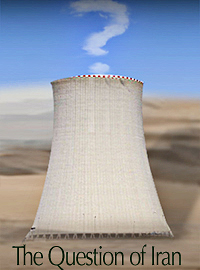
Even – in fact, especially – as a critic of the Iraq war, which he famously derided as “stupid,” Obama could call the nation to seriousness on the gathering danger of the Iranian regime. And he could do so most effectively by pointing out that the arguments in favor of the Iraq conflict now unambiguously apply to the situation in Iran.
In 2002 and 2003, we argued over the existence of Saddam Hussein’s stockpile of weapons of mass destruction. But today, no one in his right mind doubts the Iranian regime’s pursuit of a nuclear capacity. During the Bush Administration, debate raged over whether Iraq could effectively be cabined by a realpolitik policy of containment. But the radical Shia millenarianism of the mullahs in Iran leaves any containment strategy based on notions of rational calculation in Tehran dubious at best.
In the Bush years, a lack of international consensus was posited as a reason for circumspection. Today, the Middle East is a place so united by fear that the Sunni monarchy in Saudi Arabia – home of the Islamic holy cities of Mecca and Medina – has granted overflight rights to the Jewish government of Israel to strike Iranian nuclear facilities. Back then, we argued over the true extent of Iraq’s state ties to terrorism. By contrast, a State Department report released earlier this month bluntly declared Iran “"the most active state sponsor of terrorism in the world."
We are long past the hour when there were good options left to deal with the Iranian threat. Sooner or later, the President will have to determine which of his remaining choices is the least unpalatable. When that time comes, he will need the support of the American people. Remaining silent because the future is inconvenient will not steady the country and it will not deter the mullahs. Eventually, what seems like an eternal tomorrow will become today. It’s time for President Obama to start preparing.
|