




|
|
|



















18 February 2010
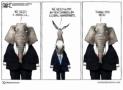
Thomas W. Kirby, a senior litigation partner who handles appellate matters in First Amendment and election law cases, discusses the U.S. Supreme Court's recent decision in Citizens United v. FEC and the rumors swirling about potential Supreme Court justice retirements at the end of the current term.
0:00
0:00
Related Podcasts

21 March 2025
Jaimie Cavanaugh, Legal Policy Counsel at the Pacific Legal Foundation, discusses what states can do to create more competition and drive down the rising cost of healthcare, how Certificate of Need (CON) laws impede access to care and block competition while limiting consumer choice and stifling innovation, and what state legislators can and should do to reform and repeal these antiquated laws.
07 February 2025
Timothy Lee, CFIF’s Senior Vice President of Legal and Public Affairs, discusses the 5th Circuit Court of Appeals recent decision regarding handgun sales, what it means for outstanding challenges to the Second Amendment right to keep and bear arms, and advancements that may be made with the new administration on other issues of importance, including telecommunications and intellectual property protections.

22 March 2019
Hans von Spakovsky, Manager of the Election Law Reform Initiative and Senior Legal Fellow at the Meese Center for Legal and Judicial Studies, discusses whether a civil and/or criminal investigation is needed to determine if Representative Alexandria Ocasio-Cortez (D-NY) has broken federal campaign finance laws.

28 September 2018
Bradley Smith, Chairman of the Institute for Free Speech and former FEC Commissioner, discusses whether a crowdfunding campaign by two liberal groups to pressure Senator Susan Collins (R-ME) to vote against Supreme Court nominee Brett Kavanaugh is legal under federal campaign finance laws.

03 November 2017
Michelle Minton, Senior Fellow at the Competitive Enterprise Institute, discusses why states should be allowed to regulate sports gambling within their borders, Christie v. NCAA, a sports betting case before the U.S. Supreme Court, and more.
10 February 2008
Recently, Reid A. Cox, Legal Director for the Center for Competitive Politics, joined CFIF‘s Renee Giachino to discuss campaign finance laws and First Amendment precedent applicable to elections and candidates.
