




















| Battle Lines Forming in War Over Trump Court |
 |
|
By Betsy McCaughey
Wednesday, November 30 2016 |
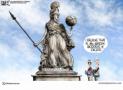
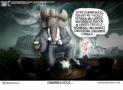
Opening shots are being fired over Donald Trump's anticipated Supreme Court nomination. A conservative advocacy group is running television ads urging Trump to appoint a justice in the mold of the late Antonin Scalia. New Senate minority leader Chuck Schumer fires back that Democrats will try to block any nominee who isn't "mainstream." Trouble is, anybody who disputes the Democrats' left-wing definition of the Constitution as a malleable "living" document is outside their mainstream. Meanwhile, pro-choice women's groups are panicked about losing abortion "rights." For now, it's much ado about nothing. No matter whom Trump appoints this time, there are already five pro-choice justices on the Court, counting Justice Anthony Kennedy. It would take a second Trump appointment to tilt the Court the other way. As a candidate Trump pledged to appoint Justices who would uphold "the Constitution as it was meant to be." Trump's victory signals the public agrees. Even so, Schumer and fellow Democrats are spoiling for a fight. In part, it's revenge for the Republicans' refusal to consider Obama's last high court nominee, Merrick Garland. Will the Democrats' tough talk lead to anything? Unlikely. Ten Senate Democrats in states Trump won are facing tough re-election races in 2018. Count on some of them to help push Trump's pick over the 60-vote threshold to win confirmation. Trump's first addition to the Court will have a major impact on labor union issues, voting procedures, the death penalty, executive power and religious freedom. On the separation of church and state, watch for the pending case, Trinity Lutheran Church v. Pauley. The Justices delayed the case while Scalia's seat was vacant, expecting a 4-4 tie. The state of Missouri awards grants to help schools make their playgrounds safer with soft, rubber paving. But Missouri nixed a grant to a Lutheran-affiliated preschool. The school sued, saying its children deserve the same safety enhancements as children in secular schools. Trump's new justice will shift the Court to allow religious institutions and the faithful to be treated equally with everyone else. Yes, the Constitution bars favoring a particular religion, but that shouldn't require government to discriminate against religion. Deference to religion doesn't mean limits on abortion. Only 29 percent of Americans think abortion should be legal "under any circumstances," and states continue to enact restrictions. But even with Trump's new justice, the Court will likely strike down these restrictions. Last June, with Scalia's seat vacant, the Court ruled 5-3 against safety regulations that would have forced some Texas abortion clinics to close. But deference to conscience could give Colorado cake artist Jack Phillips a win over his state's Civil Rights Commission, if the Court takes his case. Phillips was ordered to bake cakes for same-sex weddings, against his beliefs, and "re-educate" his staff. The Court's most consequential shift will be reining in federal power and overly aggressive regulators. That's the issue in a case the high court may take: Alaska v. Jewell, challenging the U.S. Fish & Wildlife Service's unprecedented power grab over Alaska's rivers and streams. Voter ID laws are also up for Supreme Court review, and Trump's appointee is likely to cast the pivotal vote there, too, validating states' efforts to combat voter fraud. During the recent presidential contest, President Obama's lower federal court appointees voted to strike these laws in Texas, North Carolina and Wisconsin. But similar laws survived legal challenges in states where federal judges appointed by Republicans hold sway. That's a reminder of the importance of Trump's power to appoint not just Supreme Court justices but also hundreds of lower federal court judges. The Supreme Court hears some 75 cases each term. Federal appeals courts hear 30,000. With an unprecedented number of judges scheduled to retire, Trump can turn a majority of federal courts conservative in a mere four years. By electing Donald Trump, Americans have a shot at restraining government's suffocating power over our daily lives. Now that's "mainstream." ---------------------------------------------------------------------------------------------------------------------------------------- Betsy McCaughey is author of "Government by Choice: Inventing the United States Constitution." |

Related Articles : |
