|
The economic consequences of the border tax would be significant, driving up the cost of everyday necessities for working families by an estimated $1,700 per year.
|
|
| The United States continues to suffer the developed world’s highest corporate tax rate, which not only stifles growth and employment, but also incentivizes corporations to avoid or abandon our shores.
Fortunately, a bipartisan consensus in favor of lowering rates and simplifying the code has emerged in recent years, and the Trump Administration has signaled its intent to finally get tax reform accomplished at long last.
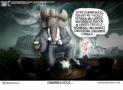
Unfortunately, some who otherwise favor reform advocate an ill-conceived Border Adjustment Tax (BAT) as part of the plan.
A BAT is a scheme by which taxes are imposed on goods such as raw materials entering the country, while goods leaving the country are not. Under existing tax law, imports face consumption taxes in the U.S. at the state and local level, while exports are taxed similarly when they are sold overseas. Accordingly, while calculated or charged by a slightly different method, a BAT would effectively impose a Value Added Tax (VAT)-like tax climate in the U.S., thereby enabling European-style bigger government and punishing consumers and small businesses alike.
Those who support a BAT, which is essentially a $1.2 trillion national sales tax on imports, claim that current American tax policy has created a “Made in America Tax” that punishes domestic manufacturers. They also claim that a BAT is necessary to ensure passage of tax reform.
But that is simply untrue. To the contrary, opposition to the BAT proposal’s controversial provisions might be exactly what prevents passage.
The economic consequences of the border tax would be significant, driving up the cost of everyday necessities for working families by an estimated $1,700 per year. The price of gas, groceries, clothing and shoes would all rise, not to mention the negative price impact on new cars and trucks, electronics and prescription medicines. The BAT will take money from hard-pressed middle class families who are barely keeping their heads above water, and transfer it to wealthier and more powerful interests. That is not what voters had in mind when they voted for conservative leadership in both the executive and legislative branches this past fall.
This big-government border tax will also threaten Main Street businesses. The retail industry is responsible for nearly one out of every four American jobs – 42 million total, and more than 90 percent of retailers are small businesses employing fewer than 50 workers. The BAT would single out these small businesses, because they tend to be disproportionately reliant upon imports, in many cases forcing them to cut jobs and even close their shops.
That’s why Republicans in Congress should reject the BAT proposal. Rather than becoming more like the big-government statists in Europe who overtax their citizens and businesses, Republicans should maintain fidelity to their conservative principles and achieve deficit neutrality by cutting wasteful spending rather than imposing a BAT so taxes can be lowered for all working families and small businesses.
So Republicans face an important choice.
They can keep their promise to reduce spending and cut the size of government so that taxes can be reduced in a manner that will spark economic growth and rising wages. Or they can make America more like Europe and impose a job-killing, price-raising tax hike on the American people that could lead to a serious voter revolt in 2018.
The stakes are simply too high for conservatives in Congress to adopt a VAT-style, national sales tax on imports. The BAT should be rejected now to protect American consumers and jobs, and facilitate much-needed tax reform at long last.
This article was original published by The Daily Caller on March 15, 2017.
|