




|
|
|















| Bidenomics Is a Big Bust |
 |
|
By Stephen Moore
Tuesday, July 04 2023 |
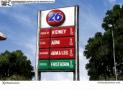
Word out of the White House is that President Joe Biden wants to tout his economic successes. He's even embracing the slogan "Bidenomics" – which most people think is a term of derision and policy flops. On the one hand, the unemployment rate is low and millions of jobs have been created over the past two years. Reality check: Virtually all of these jobs are simply the recovery of jobs that already existed in the Trump years but were lost during the COVID lockdowns – mostly in blue states. In fact, there are still five states where job totals are lower today than before the pandemic hit. That's some recovery. If the economy is so strong, why aren't Americans feeling the love? Tracking polls still show two-thirds of Americans believing the country/economy are headed in "the wrong direction." Something just doesn't feel right. Here are some reasons why: First and foremost, it has been the economic reality that for most families, in 22 of the last 25 months, inflation has outpaced wages. So how can the White House claim that worker pay is rising? Here's the trick that the Biden number crunchers are playing: The White House is touting the rise of nominal hourly earnings, i.e., wages before inflation, since Biden took office. That part of the story is true. But as in the 1970s with double-digit inflation, nominal wages rose, but families got financially crushed because prices were rising so much faster. Today, prices have risen even faster, so those larger incomes buy less. Average hourly earnings are up by $3 an hour before inflation, but down by a little more than $1 an hour in terms of purchasing power. Biden trumpets the latest reduction in gas prices at the pump – down from almost $5 a gallon this time last year. But the price that drivers pay is still about 80 cents a gallon higher than when former President Donald Trump was in office. Why is consumer spending so high? One answer is that consumer debt keeps rising. Credit card debt just recently rose above $1 trillion, and more consumers are running behind in payments. Now they are caught in a financial spiderweb with having to pay high interest rates to maintain their standard of living. Next is the burden of Biden regulations. Under this administration, the modus operandi seems to be: if it moves, regulate it. Economist Casey Mulligan has found that while under Trump, who reduced the number of new rules and edicts, regulatory costs per family fell by about $2,000 per family. Under Biden, these costs have risen by $5,019 a year. This is the hidden tax of the federal regulatory octopus. Then we have the government debt burden, which now stands at $31.8 trillion – up roughly $6 trillion since Biden came into office. Why are we borrowing such huge sums even though the COVID crisis ended two years ago? That debt burden is expected to rise to $50 trillion in 10 years even though the White House and Congress are pretending that they cut the debt. Over just the last 12 months, federal borrowing exceeded $2 trillion. This isn't progress. As for economic growth, there isn't much. Over the past five quarters, the U.S. economy has limped along at 1% growth – one-third the growth rate we should be seeing in the post-COVID era. Finally, there is the overall sense of despair and despondence – a palpable gloom that has taken over the country. Productivity of workers is falling. Test scores for children have hit a 50-year low. We are seeing more deaths of despair. Drug use is up. Fewer young Americans say they want to have kids, or believe in God, or believe in country. This doesn't feel like Ronald Reagan's Morning in America. It feels like dusk. It feels like Biden's big bills are coming due soon and that it will take a long, long time to pay them off. Reagan had a famous saying: "strong at home, strong abroad." Today, we are neither. Biden wants to strike up the band on the economy and his record as president, but few Americans feel like celebrating his "achievements." Stephen Moore is a senior fellow at the Heritage Foundation and a co-founder of the Committee to Unleash Prosperity. His latest book is "Govzilla: How the Relentless Growth of Government Is Devouring Our Economy." COPYRIGHT 2023 CREATORS.COM |
Related Articles : |
