




|
|
|

















| Trump, Forever Wars and Iraq Syndrome |
 |
|
By Byron York
Wednesday, March 04 2026 |
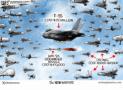
For many years in the 1970s, 1980s and into the 1990s, discussions of the use of U.S. military force suffered from an effect known as Vietnam Syndrome. Many Americans simply could not consider any proposed U.S. military action without seeing visions of a Vietnam-style quagmire in which American troops would be stuck for decades in a costly war without victory. Vietnam Syndrome finally went away after American success in the first Gulf War. But not too many years later, Vietnam Syndrome was replaced by Iraq Syndrome, which is a fear that using U.S. military power will lead to an Iraq-style quagmire in which American troops would be stuck for decades in a costly war without victory. At this moment, President Donald Trump is putting Iraq Syndrome to the test with the joint U.S.-Israeli military campaign against Iran. Trump's presidency, American prestige abroad and Republican electoral hopes in this year's midterms and beyond – they all depend on the success of the American mission. If, after initial military success, decapitating the Iranian leadership and taking out many of its weapons, the U.S. goes on to set Iran on a stable path in which it lives in peace and does not threaten its neighbors – if Trump succeeds in doing that, Iraq Syndrome will be banished forever. If, on the other hand, after initial U.S. military success, Iran descends into Iraq-style chaos with a weak and unstable government and rogue militias around the country – if that happens, Iraq Syndrome will be alive and well. The key phrases of Iraq Syndrome are "forever wars," "endless wars" and their variants – references not only to Iraq but to the decade-plus U.S. war in Afghanistan, which lapsed into nation building and ended with a disastrous withdrawal under President Joe Biden. Throughout his first term in office, and also in the 2024 campaign, Trump promised to put an end to endless wars and not to repeat the mistakes of previous presidents. Describing his Iraq drawdown in 2019, Trump said, "We're down to a very few soldiers. I said we're getting out of these endless wars – these ridiculous, endless wars. We should have never been there in the first place." At times, Trump seemed to expand the idea of staying out of "endless" wars into a pledge to stay out of all wars altogether. "I'm not going to start a war, I'm going to stop wars," Trump promised on the night of his great comeback victory in 2024. Since then, Trump has said similar things many times and named himself the "President of Peace." Trump's rhetoric has led to a strange new creature: the MAGA peacenik. It's one thing to pledge to stay out of forever wars – the U.S. should never repeat the disasters in Vietnam and Iraq. But stay out of all military conflict? That's an unrealistic pledge for a president and nation living in a dangerous world. Deciphering Trump's statements, it's probably accurate to say he believes in staying out of endless wars but was exaggerating for effect when he talked about avoiding all wars ever. In any event, by attacking Iran, and also with military action in Venezuela, Trump has angered and disappointed those in his MAGA base who took his antiwar pledges both seriously and literally. He has also shaken some of his supporters who lived through the George W. Bush years. They have seen a war with a righteous cause – Afghanistan – descend into meaninglessness. They have seen a war started by mistake – Iraq – tear apart the country. It's no surprise that they are made nervous by another U.S. president starting another war in that part of the world. The way to calm those nerves is to succeed quickly. In both his terms, Trump has favored limited, sharp, decisive military action. Think of the U.S. drone strike that took out Qasem Soleimani, head of Iran's Islamic Revolutionary Guard Corps. Think of the destruction of ISIS. Think of the lightning assault on Maduro's Venezuela. For Trump, the opposite of an endless war is not no war. It is a quick war with a clear purpose and a decisive ending. Now, Trump and the nation will find out whether that can be accomplished in Iran. There are plenty of doomsayers out there, including the Democratic politicians who want to run for president in 2028. If Trump fails, they win. But if Trump succeeds, they will look like a bunch of partisan nitpickers. And Iraq Syndrome will be a thing of the past. Byron York is chief political correspondent for The Washington Examiner. COPYRIGHT 2026 BYRON YORK
|

Related Articles : |
