




|
|
|













| Isolationism Often Proves Much Costlier Than Military Action |
 |
|
By Timothy H. Lee
Thursday, March 12 2026 |
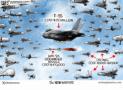
By finally taking decisive action against Iran, President Trump stands poised to become one of the most consequential American presidents in a way that Bill Clinton, Barack Obama and certainly Joe Biden were not. Along with securing our borders and substantially reducing inflation from the rate he inherited from Biden – the leading reasons that Americans returned him to the White House – Trump has already removed one dangerous dictator in Venezuela’s Nicolas Maduro, with Iran’s and Cuba’s stubborn dictatorships approaching the same precipice. That reality arrives amid debate over the merits of American and Israeli military action against Iran, as well as the more general debate over the merits of a more assertive foreign policy versus isolationism. In that debate, isolationists narrowly highlight the potential costs of acting, while rarely acknowledging the benefits of acting and the potentially catastrophic downsides of not acting. On the narrow point that there are costs to taking action, of course, they’re right. Military engagement can be costly, and that has always been true. That’s only half of the equation, however. What isolationists typically overlook is that although decisions to take military action abroad can go wrong, history shows that decisions not to intervene can prove even more perilous. The Korean peninsula offers a fitting example. When North Korea invaded South Korea in 1950, the United States could’ve shrugged and declared the conflict none of our concern, especially after four long years of World War II within recent memory. Had we chosen that path, the communist dictatorship of Kim Il Sung would’ve swallowed the entire peninsula, consigning South Koreans to perhaps the most brutal regime on Earth, complete with prison camps, famine and totalitarian misery. Instead, because we intervened, South Korea offers one of the world’s most remarkable success stories: a thriving democracy, technological powerhouse, economic player and American ally. World War II offers a similar illustration. In the 1930s, the U.S. and most of the globe embraced isolationism borne of exhaustion from World War I. Reluctance to confront Hitler’s and Japan’s early aggression, however, proved disastrous. Hitler was timidly allowed to rearm Germany, annex neighboring territories and grow gradually stronger, as was Japan. When we were finally forced to act, the cost proved far higher than it would’ve had their aggression been confronted earlier. Accordingly, non-interventionism back then paved the road to global catastrophe and genocide. Fast-forward to the current era, and the lesson remains the same. In the 1990s, Afghanistan became a safe haven for the al Qaeda terrorist network. The post-Cold War world largely ignored the threat as it metastasized under Taliban hospitality, resulting in September 11, 2001. Had the Clinton Administration treated that as a more serious threat, the worst terrorist attack in history would likely have been prevented. None of this, of course, means that every theater of the world merits intervention, and foreign policy rarely offers perfect outcomes. As Thomas Sowell’s adage goes, “There are no solutions, only tradeoffs.” The lesson is equally clear, however, that inaction can be even more costly than action. Noninterventionists might invoke the Vietnam War as a definitive counterexample of misguided American intervention, but even that experience offers more ambiguity than most acknowledge. Namely, when the U.S. entered the conflict, we confronted the very same challenge that we faced the previous decade in Korea: a communist aggressor backed by the Soviet Union and China attempting to conquer its southern neighbor by force. Accordingly, South Vietnam and South Korea weren’t morally or geostrategically different conflicts. Both involved defending populations invaded by communist aggressors. In Korea, U.S. perseverance led to a free and prosperous nation. In Vietnam, abandonment led to tyranny. Admittedly, the notion that the U.S. can safely withdraw from foreign threats and allow international dynamics to sort themselves out offers a certain superficial appeal. History, however, shows that inaction often creates power vacuums that get filled by dangerous and illiberal aggressors. Whether it comes in the form of Hitler’s Germany or Japan in the 1930s, communist expansionists during the Cold War or terrorist states in the current era, threats ignored tend to metastasize rather than simply disappear. In contrast, while imperfect, a more assertive U.S. foreign policy brought unprecedented economic growth, expansion of democratic regimes and one of the longest stretches without a major war in history. That postwar order didn’t occur by chance. It occurred because of sustained and assertive U.S. engagement. To be sure, military engagement demands careful judgment, and the U.S. should never rush foolishly into conflict. The isolationist alternative, however, ignores the ugly reality that when free nations retreat, hostile aggressors create even costlier problems. That lesson remains particularly pertinent today with Iran, because the price of confronting emerging threats too late proves far higher than the cost of confronting them earlier. |
Related Articles : |
