




|
|
|
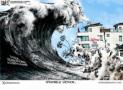
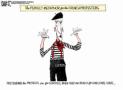
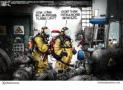
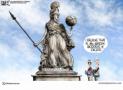




| Barack Obama and the Tyranny of False Choices |
 |
|
By Troy Senik
Thursday, May 01 2014 |
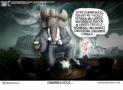
Barack Obama loves the rhetorical trope of the “false choice.” From his earliest days as a national figure, the president has repeatedly attempted to convey his intellectual superiority to ordinary politicians by announcing that some controversy of the day is being unnecessarily simplified. Thus was there “a false choice between our safety and our ideals” when it came to national security. ObamaCare was a response to “a false choice” between “government-run health care with higher taxes — or insurance companies without rules denying people coverage.” Conservative and liberal views of economics represented a false choice “between a chaotic and unforgiving capitalism and an oppressive government-run economy.” Even the president’s allies have come to regard the ploy as hopelessly facile, with liberal Washington Post columnist Ruth Marcus remarking in 2011 that, “As a rhetorical device, particularly as a political rhetorical device, the false choice has outlived its usefulness, if it ever had any. The phrase has become a trite substitute for serious thinking. It serves too often to obscure rather than to explain.” As Marcus noted, Obama’s application of the tactic would often run as follows: “Set up two unacceptable extremes that no one is seriously advocating and position yourself as the champion of the reasonable middle ground between these unidentified straw men.” This tic is worth revisiting in light of the President’s recent trip to Asia, where he found himself in a defensive crouch regarding his administration’s feckless foreign policy. Asked during his visit about criticisms that he had been insufficiently forceful in dealing with the Russian invasion of Ukraine, the President responded, “Why is it that everybody is so eager to use military force after we’ve just gone through a decade of war at enormous cost to our troops and to our budget. And what is it exactly that these critics think would have been accomplished?” His Deputy National Security Advisor, Ben Rhodes, added, “If we took all of the actions that our critics have demanded, we’d lose count of the number of military conflicts that America would be engaged in.” Who’s setting up the false choice now? According to the president’s rationale, there is no space between his approach to an expansionist Russia — which essentially consists of inertia punctuated by occasional symbolic gestures — and all-out war. What about restoring the plans for missile defense in Poland and the Czech Republic — plans that the president reneged on during his first year in office? What about galvanizing energy production in order to counteract the influence that Vladimir Putin holds over Eastern Europe as a result of his oil and gas resources? What about something as simple as acknowledging that Russia can’t be trusted to ensure that Bashar al-Assad’s regime in Syria will give up its chemical weapons? Are all of those potential responses to Putin nothing more than warmongering? This isn’t the only topic on which the President has employed precisely the same technique that he so often criticizes. Because the scandal involving the IRS harassing conservative groups doesn’t extend directly into the Oval Office, Obama has pronounced that it doesn’t involve “a smidgen of corruption.” Surely, however, there’s some middle ground between the President personally ordering audits and the whole affair being an innocent bureaucratic mishap. Similarly, the Obama Administration has referred to climate change skeptics as “deniers,” reducing a complex argument about whether global warming is occurring, what its causes are, whether we can (or need to) arrest its course and what the appropriate policy responses are into a black and white question. The same pattern happens over and over again. When the facts aren’t on the president’s side, he responds by distorting what the debate is actually about. Now more than five years removed from his original run for the White House, the tensions between how President Obama once portrayed himself on the campaign trail and how he has actually behaved in office are more vivid than ever before. The biggest difference: The candidate of 2008 claimed to be intellectually untethered from the kind of dogmatism that so often dominates partisan politics. In reality, however, Obama has proven to be little more than a reflexive ideologue, happy to embrace precisely the kind of sloppy thinking he once criticized when it suits his partisan purposes. |
Related Articles : |
