





















| "Consent of the Governed" No More? |
 |
|
By Troy Senik
Thursday, July 10 2014 |
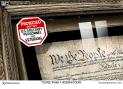
Here’s a disquieting observation: The most controversial decision out of the Supreme Court this session dealt with a legal requirement that was never approved by a single member of Congress. ObamaCare’s contraception mandate — the applicability of which was narrowed by the judiciary last week — was, believe it or not, never put to a vote. This may strike you as astonishing, but it’s business as usual within the federal government. Here’s the situation: The contraception mandate was implemented under the aegis of the Patient Protection and Affordable Care Act, the law that we’ve all come to refer to as “ObamaCare.” Yet nowhere in the text of the law is there a provision about compelling employers to provide insurance coverage for their workers that covers contraception. That requirement was implemented through the Department of Health and Human Services, which was tasked with actually developing the rules that would bring ObamaCare into force. To give you an idea of how elaborate that project is, HHS’s most recent passel of regulations (released just before the July 4 holiday) ran to nearly 1,300 pages — and that was just the rules on payment rates for doctors and hospitals. Because “preventative” commonly connotes care intended to head off future illness — and because pregnancy is not generally regarded, at least outside of certain liberal precincts, as a disease — it doesn’t logically follow that this was a green light to force devoutly religious employers into financing the morning-after pill. This is far from an aberration. What’s truly terrifying about the modern structure of the federal government — and what’s unknown to most Americans — is just how many rules having the force of law never receive a vote from the legislators elected to work the people’s will. Consider: Congress passed — and the President signed — 72 bills into law in 2013. In the same year, 80,224 pages of regulations were added to the Federal Register. When it comes to making law, our elected legislators are decidedly secondary figures. The real power belongs to the unelected officials throughout the federal bureaucracy. ObamaCare is one of the most flagrant examples of this trend, but it is at work just as much in the Environmental Protection Agency’s efforts to develop new regulations for carbon emissions (something Congress explicitly rejected during President Obama’s first term) or the IRS’s attempt to impose more restrictive regulations on how non-profit groups can exercise their rights to political free speech. At every turn, major matters of public policy are being hammered out in the bowels of the executive branch, far from the prying eyes of the voting public. This is the legacy of the progressive movement, which, beginning over a century ago, sought to place expanded political power in the hands of learned, dispassionate functionaries rather than leaving public policy to lawmakers actually elected by — and thus accountable to — the American people. The progressive dream rested on a fiction: that intellectuals would best be able to dispassionately determine the public good if they were insulated from the conflict of day-to-day politics. A century’s worth of evidence points to the contrary conclusion. These days, most progressives probably wouldn’t have the temerity to argue that the bureaucrats of the administrative state are an enlightened elite. So why do they stick with it? Because they know the progressive agenda would wilt under public scrutiny. Why put controversial matters to a public vote when you can rule from within the executive branch and essentially become a law unto yourself? As deplorable as President Obama’s consistent lawlessness has been, it has this virtue: it can last only as long as his presidency. The administrative state, however, is practically immortal. Long after Obama is gone, mid-level officials no one’s ever heard of will still be making decisions that reach into every corner of our lives … unless Congress stops the usurpation and brings the executive branch to heel. That may prove to be the work of decades. But it is, nevertheless, a fight worth having. If the “consent of the governed” still means anything, the administrative state must be wound down — and power must be returned to public officials directly responsible to the voters. Anything less makes a mockery of the core values of American democracy. |

Related Articles : |
