
















| George Will's Worst Column Ever |
 |
|
By Timothy H. Lee
Thursday, July 16 2015 |
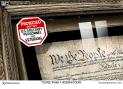
George Will remains the dean of contemporary conservative thought, an intellectual beacon who elevates public discourse in applying changeless principles to changing times. On a more personal note, Mr. Will may be the foremost political influence on my own life. It was therefore profoundly disappointing to digest his column this week entitled "The 110-Year-Old Case that Still Inspires Supreme Court Debates." The case to which Will refers in his title, attempting to defend the indefensible, is the rightfully discredited 1905 Supreme Court decision in Lochner v. New York. There, a narrow 5-4 Court majority overturned a New York state law imposing sanitary standards upon bakeries and capping workers' hours at 10 per day and 60 per week. Such laws are commonplace and uncontroversial today, but a century ago triggered what the late Robert Bork labeled "an opinion whose name lives in the law as the symbol, indeed the quintessence, of judicial usurpation of power." The Lochner majority, substituting its subjective political and economic preferences for interpretation of constitutional text, held that the statute somehow interfered with "the right and liberty of the individual to contract." The problem is that "the right and liberty of the individual to contract," while defensible as economic and social theory, appears nowhere in the Constitution itself. The Constitution is silent regarding such issues as bakery sanitation standards, minimum wages, overtime laws and the maximum hours per day or week that bakery employees should work. Accordingly, therein lies the peril of what we broadly label "judicial activism," when judges like the Lochner majority appoint themselves super-legislators from the bench instead of playing their rightful role as neutral arbiters of existing laws. The Constitution prohibits certain things, such as cruel and unusual punishments or unreasonable searches and seizures. The Constitution also mandates certain things, such as equal protection of the laws or just compensation for the taking of private property. On remaining matters the Constitution is silent, leaving it to our representative democracy to enact laws so long as they do not violate its express provisions. On that basis, the Founding Fathers carefully divided powers among the various branches, so it threatens our system of checks and balances whenever judges disregard their proper role of interpreting laws against the text of the Constitution and instead exercise powers more properly left to the legislative branch. As Bork cogently explained: "The central problem for constitutional courts is the resolution of the 'Madisonian dilemma. The United States was founded as a Madisonian system, which means that it contains two opposing principles that must be continually reconciled. The first principle is self-government, which means in wide areas of life majorities are entitled to rule, if they wish, simply because they are majorities. The second is that there are nonetheless some things majorities must not do to minorities, some areas of life in which the individual must be free of majority rule. The dilemma is that neither majorities nor minorities can be trusted to define the proper spheres of democratic authority and individual liberty. To place that power in one or the other would risk either tyranny by the majority or tyranny by the minority." In his column this week, however, Mr. Will jettisons that logic. He celebrates the Lochner decision because the bakery statute in question constituted "rent-seeking by large, unionized bakeries and their unions." But many laws, if not most laws, can be characterized by critics as "rent-seeking," having "unjust consequences" or based upon "disreputable motives." That may render them unpalatable, but it doesn't make them unconstitutional. After all, there are any number of laws presumably favored by Mr. Will that others would slur as unjust or arising from disreputable motives, but one suspects that he'd disfavor judges overturning them solely on the basis of their own subjective political disagreement. To be sure, Mr. Will has with justified zeal endeavored in recent years to disabuse conservatives and libertarians from their reflexively favorability toward "judicial restraint" and opposition toward "judicial activism." He correctly highlights how undue judicial deference toward legislative, executive and popular acts violates judges' proper duty under our constitutional system of checks and balances to overturn laws or regulations that violate specific rights protected against democratic encroachment. By way of recent example, look no further than the Supreme Court's latest ObamaCare decision, in which the majority spared the law the demise it deserved out of improper deference to a hypothesized Congressional intent that contravened the clear text of the statute itself. But just as undue judicial restraint is to be lamented, so is undue judicial activism. Judges should interpret laws as objectively as possible, applying constitutional text to laws challenged before them. Mr. Will asserts that "the United States urgently needs many judicial decisions as wise as Lochner," but the Founding Fathers had a better idea: a judicial branch that is neither too deferential nor too activist. |

Related Articles : |
