









| Restoring Economic Liberty Will Require Restoring Democracy |
 |
|
By CFIF Staff
Thursday, April 16 2009 |
|
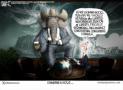
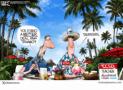
Hope springs eternal for politicians in the minority. Embattled Republicans are already spinning scenarios in which the 2010 midterm elections will provide an unambiguous rejection of the Obama Administration’s dramatic expansion of government. But what if the GOP is proven right … the voting public once again demands change … and America discovers that a Congress full of resurgent Republicans is powerless to stop the bleeding? That scenario is all too plausible given the breathtaking rate at which the legislative branch is losing its power to determine the nation’s economic future to unelected bureaucrats. This trend began late last year, when the Bush Administration used fears of a nationwide financial meltdown to smooth passage of its Troubled Assets Relief Program (TARP), promoted as a panacea for the nation’s financial ills. TARP, unfortunately, did not unfold as advertised. Even its name proved to be a lie. Rather than buying up the “troubled assets” that were supposedly prolonging the credit crunch, TARP morphed into a plan for injecting liquidity into the nation’s banking system (a move, it should be noted, that has done little to increase lending rates). Because Congress had practically given the money away at gunpoint, the mandarins at the Treasury Department were free to change the program’s aims at will – despite the fact that they had claimed only weeks before that the original plan was the only thing standing between the nation and economic oblivion. More galling still, in December TARP became the vehicle by which the Bush Administration decided to bail out the auto industry – this despite the fact that Congress had debated the merits of a handout to Detroit and decided against it. But when you write a blank check to the executive branch, the will of the people’s representatives becomes nothing more than distracting humbug. Thankfully, TARP’s $700 billion line of credit is almost dry. But the program’s example of keeping crucial decisions about the nation’s future free from the public’s meddlesome scrutiny shows no signs of abating. Lost in much of the furor over stimulus packages and executive bonuses, for instance, is the incredible amount of power that has been consolidated in the Federal Reserve over the course of the financial crisis. The Fed was established in 1913 with a simple mandate: preserve the value of the dollar by keeping the country’s money supply stable. Yet in recent months, the nation’s central bank has called on obscure emergency powers to spend eye-popping amounts of taxpayer money without one ounce of accountability to voters. On a single day in March, the Fed decided to carpet bomb the market with nearly $1.2 trillion in “investments.” And what were they investing in? Treasury bonds (of the kind that the Chinese government is starting to lose faith in), mortgage-backed securities (of the kind that the market is starting to lose faith in) and the debt of Fannie Mae and Freddie Mac (of the kind that everyone in their right mind is starting to lose faith in). Apart from profligate spending, the Fed is intentionally stonewalling the public on questions of accountability. It has steadfastly refused to disclose which banks it has distributed funds to, leading some members of Congress to call for an audit (which, needless to say, the Fed has resisted). Moreover, up until this week, the Fed was encouraging banks that are currently undergoing “stress tests” aimed at determining their long-term viability to keep the results hidden from the public. If the lack of transparency was such a key component of our economic meltdown, one wonders why the nation’s central bank is so keen to keep Americans in the dark about the state of the financial sector. Unfortunately, the desk jockey dictatorships look primed to spread well beyond the financial sector. Last month, the Obama Administration’s Environmental Protection Agency announced that it would begin regulating carbon dioxide as a pollutant, a step that promises dramatic changes (and costs) to commerce throughout the country. Members of Congress like Ed Markey (D-MA), chair of the House Select Committee on Energy Independence and Global Warming, welcomed the move, claiming that the prospect of regulation will force industry to succumb to demands for a cap and trade system in order to avoid the unpredictable whims of the regulatory state. Markey’s enthusiasm for extortion may be premature. Two sets of inconvenient truths continue to make the prospects for cap and trade dim. First, the virtually unanimous opposition of Republicans and the queasiness of Democrats from states with heavy industry makes it unlikely that the proposal will get the necessary votes. Second, Congress never misses a chance to pass the buck. If the EPA can provide the muscle for an unpopular policy – and keep members of the legislative branch from having to answer for it on Election Day – it’s unlikely that residents of Capitol Hill will get in the way. Sadly, the Obama Administration looks committed to this model of governance. An unelected car czar is currently dictating terms to Detroit’s decaying automakers. The president’s health care plan envisions an unelected national health board handing down decrees on which procedures doctors should use if they want government support. And the justly maligned “Employee Free Choice Act” calls for the unelected National Labor Relations Board to impose binding arbitration on companies who cannot reach terms with newly-formed unions within 90 days. The results of the arbitration could not be appealed and could not be changed for two years. Remember, this is the most open and transparent administration in history. As the tea parties held throughout the nation this week demonstrate, a growing segment of the population is serious about returning America to its centuries-long tradition of economic freedom. This is a noble goal. But taking back economic liberty will require first taking back democracy. Perhaps our challenges are even closer to those of the founding fathers than we had imagined. |
Related Articles : |
