




















| End the Fake Filibuster |
 |
|
By Betsy McCaughey
Wednesday, February 08 2017 |
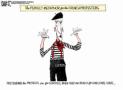
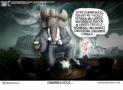
Tuesday, Senate Democrats lost the battle to stop President Trump's pick for secretary of education. But on bigger battles ahead, the Democrats have a powerful weapon—and they intend to use it. Republicans control both houses of Congress and the White House. Yet Senate Minority Leader Chuck Schumer boasts that he can block Trump's legislative agenda, including repealing the Affordable Care Act. "Obamacare, he won't be able to do it," Schumer says. "Forget about repealing or modifying Dodd-Frank." What allows Schumer to thwart the majority's will and paralyze the Senate? Not the U.S. Constitution, as the framers designed it. The answer is a centuries-old Senate practice called the filibuster. Senators in the minority could take the floor and talk endlessly, never agreeing to formally end debate so the majority could vote. They'd talk the legislation to death or "filibuster" it, in the process shutting down all other Senate business. The House never permitted it, always allowing a simple majority to shut down debate. In the Senate, the idea was to make sure the minority was heard. But over the years, the rule was exploited to stop legislation altogether. Southern Democrats used it to block anti-lynching legislation in the 1930s and civil rights laws in the 1960s. Not until June 10, 1964 were anti-segregationists able to muster enough votes to cut off a filibuster on a major civil rights bill—after 60 days of debate. Then, in 1975, the Senate modified the filibuster, adopting a 60-vote rule. Senators could close debate and bring legislation to a vote—if they had 60 votes to do it. Since then, Senators don't have to monopolize the floor and debate endlessly, shutting down all business. Threatening to do so is enough to hold up a bill. Call it a fake filibuster. Right now, Republicans have 52 Senate seats, not enough to stop Democrats from filibustering legislation and Supreme Court nominees. In recent years, Republicans have benefitted from the 60-vote rule. During President Obama's first two years in office, the Republican Senate minority used it to kill pro-union card-check legislation, the Dream Act, gun control and a federal minimum wage hike. Now Democrats want payback. Minutes after President Trump announced his Supreme Court nominee, Schumer proclaimed that "on a subject as important as a Supreme court nomination," there have to be 60 votes to move the nomination along. That's politics. But D.C. insiders talk about the 60-vote rule as if it were sacrosanct, the holy grail of democracy. "It's the way our Founding Fathers set it up," says Senator Bill Cassidy, R-La. Sorry, senator. That's not the case. The framers designated five circumstances requiring a supermajority: convicting an impeached president or other high officer, amending the Constitution, ratifying a treaty, overturning a presidential veto or expelling a member of Congress. That's the list. Passing laws and confirming justices aren't on it. At the Constitutional Convention, the framers considered requiring a supermajority in the Senate to pass laws, but repeatedly rejected the idea. James Madison explained in Federalist No. 58 that it would give the minority control over the majority. The "principle of free government would be reversed." Requiring laws to pass two houses of Congress and giving the president a veto were better ways to promote wise lawmaking. Alexander Hamilton warned a supermajority requirement would cause "tedious delays" as it had under the failed Articles of Confederation. This is just what we're facing now. Meanwhile, McConnell, a Senate lifer first elected in 1984, defends the 60-vote rule, telling colleagues not to "act as if we're going to be in the majority forever." NYU law professor Burt Neuborne deplores these "rules that scratch my back today and yours tomorrow." They protect career politicians but not the public. The filibuster dashes voters' hopes that an election can produce real change. Some call dropping the filibuster "going nuclear." Actually, it would be a return to what the framers envisioned—"going original." ---------------------------------------------------------------------------------------------------------------------------------------- Betsy McCaughey is chairman of the Committee to Reduce Infection Deaths. |

Related Articles : |
