




|
|
|
















| FBI Crime Rate Error Erodes Trust in Government |
 |
|
By Timothy H. Lee
Thursday, October 24 2024 |
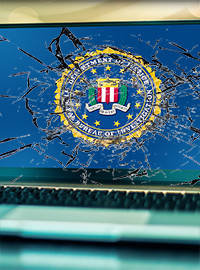
Americans’ faith in the federal government remains historically low, partly because we simply can’t trust what it tells us. That undermines the political left’s arrogant top-down model of micromanagement of our everyday lives by “expert” administrative state bureaucrats, since that model assumes that the data on which they rest their decrees is correct. When that data is subsequently exposed as defective, it further calls their entire governance model into question. The latest illustration arrives with a Federal Bureau of Investigation (FBI) admission that its initial claim that crime dropped in 2022 was incorrect. After first reporting that crime fell by 2.1% that year, it just conceded that crime actually rose 4.5% instead. Between those two reports, of course, Kamala Harris supporters and mainstream media – obviously an overlapping demographic – ran with the initial number in order to falsely “fact check” Donald Trump. The episode echoes a similarly false “fact check” during the 2012 Obama/Romney debate by CNN moderator Candy Crowley, also benefiting the Democrat in that race. It also follows a recent correction from the Department of Labor, which massively overestimated monthly job creation that once again placed the Biden/Harris administration in a falsely positive light. These persistent errors chip away at the political left’s agenda, which advocates an expansive role of the federal government in micromanaging nearly every societal realm from internet service to healthcare to education to our economy. Central to their ideology is the idea that administrative state bureaucrats – who aren’t elected to their positions and enjoy broad protection from any consequences for their errors – should wield authority over our daily lives based on their more enlightened perspectives. They insist that such technocrats are better equipped to run citizens’ lives than citizens themselves. Perhaps most offensively, the left often insists that its ideological agenda is somehow not ideological at all, but rather based on “trust in science” or greater objectivity. By claiming to insulate policy decisions from what they consider messy self-interest of the people actually impacted by regulation, they insist that bureaucrats can focus instead on achieving optimal outcomes based upon research, evidence and dispassionate deliberation. With each accumulating significant error, however, the left’s governance model rightfully comes under greater public scrutiny because those revelations call into question the reliability of the administrative state and its belief in the power of government by experts. The Covid pandemic offered another perfect example of Americans’ everyday lives being affected by defective government data and arrogance. Evolving guidance from federal agencies, based upon shifting data, led to confusion and erosion of public trust. In time, many bureaucratic positions were exposed as incorrect, oftentimes after contrary evidence and perspectives were deliberately censored. For a governance model that rests so heavily on data and alleged expertise, even small mistakes can create a growing atmosphere of distrust, and when bureaucrats base decisions on inaccurate information it erodes the credibility of the entire administrative state. Moreover, as referenced above, the left’s governance model raises deeper questions about the problem of accountability. Unlike elected officials who can be voted out of office, administrative state technocrats remain insulated from public opinion and electoral consequences. In most cases, such personnel also enjoy significantly more lucrative incomes, benefits and job security than workers in the private sector. That only aggravates a public perception that decisionmakers are unaccountable to the people whose lives they regulate. When mistakes are made or policies fail, there’s typically no mechanism for holding those responsible accountable, exacerbating the frustration. As it relates to crime rates in America, the first-hand public experience contradicts bureaucratic assurances. Specifically, a National Crime Victimization Survey of 230,000 Americans reveals that urban violent crime rates have increased 40% since 2019, while urban property crime rates have increased 26% over that period. Accordingly, when Americans’ own experience contravenes the assurances of government “experts,” they naturally trust the former. So while the political left prefers that bureaucrats manage complex societal issues through “expert” governance, revelations of defective data cast doubt on that model’s effectiveness and legitimacy. With trust in government stagnant at record lows, incidents like the FBI data admission challenge the claim that bureaucrats can be trusted to run citizens’ lives better than the citizens themselves. As we approach a pivotal election, those citizens must ponder the implications as they decide which governance model to endorse. |
Related Articles : |
