




|
|
|


| Facing Fact: Evidence Confirms that Lee Harvey Oswald Assassinated JFK and Acted Alone |
 |
|
By Timothy H. Lee
Thursday, April 10 2025 |
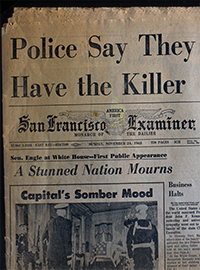
Think about prominent assassinations and attempted assassinations in American and recent world memory. Think of Abraham Lincoln, James Garfield, William McKinley, John Lennon, Pope John Paul II, Ronald Reagan and, more recently, Donald Trump. Even more recently, think of Luigi Mangione, who murdered United Healthcare executive Brian Thompson in cold blood in New York in December, and for whom Attorney General Pam Bondi has rightfully sought the death penalty. Notably, each involved deranged lone assassins or attempted assassins. Conspiracy fantasists across increasingly various points along the ideological spectrum, however, cling to the logically unsustainable yet nevertheless persistent belief that John F. Kennedy’s assassination on November 22, 1963, was some sort of freak exception from that norm. Nearly sixty years after Kennedy’s assassination, a recent release of previously classified documents relating to it only confirmed what remains abundantly clear: Lee Harvey Oswald acted alone. There was no bombshell. No shadowy puppet masters. Just the cold reality that a single, disaffected Marxist altered the course of history with three shots from a perfect sniper’s window. Despite breathless speculation about Central Intelligence Agency (CIA) or Federal Bureau of Investigation (FBI) plots, Mafia involvement, the military-industrial complex or imaginary shooters on grassy knolls, none of it withstands scrutiny. Those conspiracy theories aren’t merely an intriguing historical curiosity, however. They manifest a deeper problem in our civic culture: stubborn hostility toward facts, erosion of trust in institutions and typically an indulgence with leftist fantasy over truth. They also dishonor the memory of President Kennedy himself. Whatever one’s opinion of the 1964 Warren Commission report, in any event, its conclusion remains corroborated by later reinvestigations, numerous independent forensic reviews, the clarifying effect of time and the absence of any serious contradictory evidence. A full recitation of that evidence lies beyond the scope of this column, but interested readers can access the masterpiece “Reclaiming History” from former Charles Manson prosecutor Vincent Bugliosi. For more compact recitation, readers can also read Gerald Posner’s “Case Closed” or even a remarkably impressive ABC News reenactment and investigative report from 2003. A straightforward summary of the facts, however, reveals that Oswald’s sniper rifle, with which he was proudly photographed prior to his death, was recovered at the Texas School Book Depository where he worked. Ballistics analysis confirmed that the bullets recovered matched his rifle. Eyewitnesses placed Oswald at the scene. His fingerprints were all over the murder weapon as well as boxes stacked around the window to conceal him. He fled the building after the assassination, murdered Dallas police officer J.D. Tippit when he attempted to stop him and violently resisted arrest in a nearby movie theater. That’s not the behavior of a man framed or manipulated, it’s the behavior of a man who understood the gravity of what he’d just done. Oswald’s own life story further eliminates any need for conspiratorial theorizing. He was a dedicated communist and Fidel Castro sympathizer who had already attempted to assassinate retired U.S. Army General Edwin Walker. He had earlier defected to the Soviet Union, returned still hostile toward America and harbored intense grudges against American institutions. His motive and behavior were ideological, personalized and sloppy. Nevertheless, conspiracy advocates have insisted for decades that if the federal government would release all of the documents within its possession wholesale, the “truth” would emerge. Now that records have been released, however, they only vindicate the official record rather than upend it. Thousands of pages of CIA, FBI and State Department files were declassified in recent years, and while they occasionally reveal commonplace bureaucratic dysfunction, missed signals and after-the-assassination confusion, they suggest nothing resembling some sort of hidden plot. Overhyped documents focus on Oswald’s pre-assassination visit to Mexico City, where he unsuccessfully sought travel passes to Cuba and the Soviet Union. Rather than implicating those or any other foreign government, however, they reinforce Oswald’s instability and desperation. Not a single released document uncovers or even suggests any connection between Oswald and any coordinated plot to kill JFK. The absence of any such evidence – after sixty years of searches – remains damning to conspiracy theories as the evidence of Oswald’s guilt is compelling. It remains understandable that some Americans, stunned by the loss of such a young and dynamic president, would seek meaning in the tragedy. The idea that a single angry, otherwise incompetent lifelong loner could change history can be unsettling. Conspiracy theories therefore offer an illusion of meaning and control, and imply that terrible events are orchestrated rather than random. They also often serve as methods to demonize institutions like the U.S. military that many conspiracy theorists despise. Conspiracy theories also come at a cost. When we reject overwhelming evidence in favor of pet fictions, we erode historical accuracy, reason and intellectual discipline. Those aren’t abstract academic virtues, they remain the cornerstone of a free society. Liberty and a peaceful society demand responsibility and elevating hard truths over titillating lies. Accepting that Oswald acted alone doesn’t suggest government or institutional infallibility, of course, but it does mean refusing to surrender to toxic paranoia. Whatever his other flaws, Kennedy believed in the power of reason and the pursuit of knowledge. So should we. |
Related Articles : |
