




|
|
|













| There Is No Economic Emergency |
 |
|
By David Harsanyi
Friday, April 11 2025 |
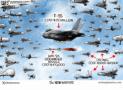
The case for protectionism revolves around a host of doom-and-gloom myths that we should not accept. "We don't make anything anymore!" I don't know how many times I've heard defenders of President Donald Trump's new tariff regime bleakly note that the U.S. economy is a mere husk of its glorious old self. Is our manufacturing base perfect? No, but output is at an all-time high. We are the world's second-largest manufacturer and exporter after China, which has four times the population – whose workers toil in monotonous, low-paying jobs that Americans no longer need or want. Only about 17% of the U.S. economy is goods and services imported into the United States. You're only a slave to globalism in your imagination. Now, to convince people that "we don't make anything anymore," protectionists focus exclusively on dying Rust Belt towns – a problem deserving of our attention – while ignoring the widespread growth and success of the South and West. We can make anything we want. We choose to buy cheaper goods from elsewhere and use the savings to grow advanced industries, which is one reason we dominate the global economy. I'm sorry, but there is no dynamic economy where workers do the same things in the same way in the same place forever. Yet, Commerce Secretary Howard Lutnick contends Trump's tariffs will eliminate a foreign "army of millions and millions of human beings screwing in little, little screws to make iPhones" and bring them to the U.S. Why? U.S. manufacturers lead the world in capital-intensive, high-skill industries, producing sophisticated products in aerospace, biotechnology and high-end electronics. We are the world's leading exporter of food. We don't need people or machines screwing things together any more than we need Linotype operators. Moreover, what if American workers don't want sweatshop jobs – or even manufacturing jobs? There's an average of 500,000 open manufacturing jobs on any given month. Less than 8% of manufacturing workers are under age 25. Meanwhile, there are – and will always be – needs for vocations requiring trade skills, including construction, plumbing, electrical work, carpentry, welding, and repairing and maintaining automation. "OK, but the working class is poorer, and the middle class has been hollowed out." No. The middle class is bigger and richer, partly because working-class Americans keep joining it. In 1970, around 32% of Americans lived on $35,000 or less (in today's dollars). Today, around 23% do. The middle class, those making $35,000-$100,000, dropped from around 54% to around 39% of the working population because the high-income Americans, those making $100,000 or more, grew to 37%. The middle class is also shrinking because the upper middle class is growing. Median salaries have consistently gone up. "But America is falling behind." No, we're not. One way to measure how well a country is doing is to compare its fortunes to the rest of the world. Other than a few small nations, we have the highest GDP per capita in the world. To put it in perspective, West Virginia's per capita GDP is higher than any major European nation, including Germany. The gap hasn't closed, it has widened. "We're being ripped off, David!" It seems that people massively overestimate the protectionism of other countries. How many Americans know that before Trump's trade war, Canada and Mexico effectively had a 0% tariff rate on 95% of U.S. goods? Australia had a 1.8% weighted tariff. Japan was at around 2%. The European Union's trade-weighted average tariff was 2.7%. Israel removed all tariffs but was still hit with a 10% rate. Right now, Trump has higher tariffs on dozens of countries than they have on us. The cockeyed formula he relies on is predicated on "trade deficits." If we ever balance trade with smaller and poorer countries that can't afford to buy anything we make, then we'll have something serious to worry about. "Why are American streets filled with cars from Europe and Japan, but their streets are empty of American cars?" asked Trump aide Stephen Miller. "Even as we provide defense and security for both?" Like almost everyone in the administration, Miller vacillates from arguing that the only way to make America great again is self-sufficiency to arguing that we want reciprocation and more globalism. It makes no sense. But anyway, European streets aren't empty of American cars. In a bad year in 2024, Ford sold 426,307 vehicles in Europe. Tesla sold 327,635. And Japan had zero tariffs on American cars before the trade war. By the way, Honda, which employs around 30,000 people in the U.S., manufactures nine of the country's top 15 made-in-America cars. The Japanese invest around 12 times more in the U.S. than we do in their country. When tariffs hurt the economy, as they always do, people accuse "Wall Street," as if it's being directed by a few people, of hurting "Main Street." This is paranoia. In 2024, 62% of Americans owned stock, or about 162 million people. It's true that most average people's stocks are in retirement funds. However, around half of private-sector employees work for publicly traded companies. None of this contends that there aren't serious problems in many of our communities: out-of-wedlock births, divorce, drug use and depression. There are no utopias. But overall, we are far better off and stronger than the doomers will tell you. David Harsanyi is a senior writer at the Washington Examiner. Harsanyi is a nationally syndicated columnist and author of five books – the most recent, "The Rise of Blue Anon," available now. COPYRIGHT 2025 CREATORS.COM |
Related Articles : |
