




|
|
|















| Nobel in Economics Highlights Value of Intellectual Property |
 |
|
By Timothy H. Lee
Thursday, October 23 2025 |
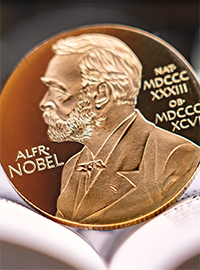
Although recent improvements in the Middle East naturally cast renewed focus on the Nobel committee’s marquee Peace Prize, the organization also deserves credit for its choice in this year’s Prize in Economic Sciences. This year’s trio of winners – Joel Mokyr, Philippe Aghion and Peter Howitt – were notable “for having explained innovation-driven economic growth,” in the Nobel committee’s words. More specifically, the trio’s scholarship in innovation-driven growth highlights underappreciated role of intellectual property (IP) – patents, copyrights, trademarks and trade secrets. Accordingly, the Nobel committee’s selection offers an important framework for policymakers and fellow economists at a moment when patents and IP find themselves under increasing attack. Aghion and Howitt in particular focus their body of work on the recognition that innovation depends upon strong incentives that encourage entrepreneurs, inventors and scientists to take risk, develop new technologies and displace outdated ones. In their landmark growth model, IP rights – especially patents, which grant inventors a period of exclusivity to reap the rewards of their investment and risk before competitors are allowed to imitate their innovations for their own profit – provide that indispensable spark for that process. Patent protections enable holders to recover the high costs of research and development, as well as raw effort. Aghion’s and Howitt’s scholarship empirically demonstrates that robust patent systems stimulate technological advancement by aligning private rewards with the social progress they bring. In economies where inventors can depend upon enforceable IP rights, they show, innovation flourishes. Ultimately, those mechanisms drive productivity growth and rising living standards, compared to nations less protective of patent and other IP rights. Just as the rule of law and protection of tangible property have promoted prosperity through the centuries, IP protections increasingly form the foundation of today’s knowledge economies. The Nobel committee’s recognition of Aghion and Howitt thus underscores an enduring truth: Societies that respect and enforce strong patent and IP rights will remain the societies that end up most effectively harnessing human creativity to advance the common good. America’s Founding Fathers understood that causal relationship more than two centuries ago. They understood that IP rights aren’t a privilege, but a natural right central to liberty and prosperity. Accordingly, they deliberately drafted Article I, Section 8 to empower Congress “To promote the Progress and Science and useful Arts, by securing for limited Times to Authors and Inventors the exclusive Right to their respective Writings and Discoveries.” Over two centuries later, the United States continues to lead the world in protection of IP, and for that reason remains the most inventive and prosperous nation in human history. As just two examples, America routinely places first in the U.S. Chamber of Commerce’s annual Global Intellectual Property Index and World Intellectual Property Organization (WIPO) report for patent and overall IP environment. Although other nations now lead the U.S. in terms of free-market policies, which themselves remain vital for innovation and prosperity, what separates us from the rest of the world is our protection of IP rights. We’re not the most populous nation in the world, but we remain unparalleled in telecommunications and computer technology, aerospace, artificial intelligence, music, cinema, other entertainment and identifiable trademarked logos like Coca-Cola and Apple. In the field of pharmaceuticals, America accounts for a staggering two-thirds of all new lifesaving drugs introduced to the world each year. Breakthrough treatments that save and extend lives – from cancer therapies to disease vaccines – originate overwhelmingly from U.S. laboratories, secured by a patent system that allows innovators to fund research with confidence that their discoveries won’t simply be confiscated or appropriated. That American legacy reflects the same principle that animates the scholarship of Aghion and Howitt. Their work that won them the Nobel demonstrates how nations with robust patent and IP systems consistently achieve higher rates of innovation, productivity and growth. Conversely, nations that weaken IP protections – which the Biden Administration attempted – inevitably stifle innovation and experience slower growth. Without secure IP rights, innovators have little incentive to invest their time, intellect and resources in developing new inventions. Accordingly, the Nobel committee’s prize in economics this year reaffirms the wisdom of America’s Founding Fathers as embedded in the U.S. Constitution. Respect for patent and IP rights propel humanity forward, and no nation embodies that principle more successfully or consistently than the U.S. It’s therefore worth applauding the Nobel committee in its choice of award this year. |
Related Articles : |
