




|
|
|

















| It’s Not the Drugmakers: Federal Court Exposes the 340B Program's Role in High Drug Prices |
 |
|
By Timothy H. Lee
Thursday, May 14 2026 |
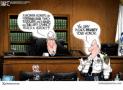
In the quest to reduce drug prices for American consumers, reforming a federal program originally intended to lower costs by passing drugmaker discounts to patients offers a great place to start. A new ruling from United States District Court Judge Daniel Traynor offers welcome progress in that regard. In a significant legal victory for American consumers that vindicates America’s pharmaceutical manufacturers, Judge Traynor’s opinion highlights the abuses surrounding what’s known as the federal 340B drug pricing program – officially known as the Public Health Service Act of 1992 – that began with noble intentions but has become a windfall for hospital and pharmacy benefit manager (PBM) grift. The 340B program originally encouraged hospitals, especially those serving lower-income Americans, to buy drugs from manufacturers at steeply discounted prices. Obviously, the law sought to pass those discounts on to consumers. Since 1992, however, hospitals, contract pharmacies and PBMs frequently pocket the difference between the discounted drugmaker cost and the full price instead of passing that difference to patients. In other words, patients often pay the original undiscounted price, while middlemen and hospitals reap windfall profits. That raises the obvious question: If drug innovators must provide enormous discounts on their manufactured products, why aren’t patients seeing lower prices as a result of the 340B program? In that regard, Judge Traynor’s ruling offers an important step in exposing the 340B program’s defects and restoring accountability. The underlying lawsuit challenged the federal 340B program for its overreach and increasingly expansive burdens imposed upon pharmaceutical manufacturers. Drugmakers have argued for years that the federal government gradually transformed what started as a limited discount program into an open-ended entitlement that benefits hospitals and PBMs, not the intended patient beneficiaries. Judge Traynor agreed, emphasizing that hospitals and PBMs exploit the 340B program while scapegoating drugmakers: [A] program meant to help American poor is being abused to provide a windfall to hospital conglomerates and participating pharmacies. … Here is what is really going on: a coordinated collusion between the state’s covered entities and contract pharmacies to exploit Congress’s inattention to a federal program. As a result, pharmacies and third-party administrators pocket billions of dollars each year. This scheme works because no one considers manufacturers as victims. Big pharma garners little sympathy. (Emphasis added.) As that decision highlighted, the federal 340B program has become a mechanism for grift over the past three decades with little transparency or oversight, but the frequent political response hasn’t been reform. Instead, activists and government officials increasingly demand even more coercive bureaucratic intervention in the form of drug price controls and weakening of patent rights. That offers a catastrophic course for consumers in the real world. The U.S. accounts for an astounding two-thirds of all new drugs introduced to the world, and Americans enjoy the highest levels of access to those lifesaving innovations, because America still provides stronger intellectual property (IP) protections for inventions while emphasizing free market policies and avoiding government price controls. In contrast, real-world experience provides an unambiguous warning about what occurs when governments impose price controls: shortages, rationing and reduced innovation, not lower costs for consumers. Price controls can’t repeal the laws of economics, and merely distort markets until products become scarcer while innovation and investment disappear. Europe and Japan actually offer frightening cautionary examples. Many of those nations impose strict drug price controls, which results in delayed access to new therapies and fewer cutting-edge treatment options. Overall, consumers in those countries generally enjoy access to only about half of the new drugs available to Americans. That’s no accident or coincidence. It results from America’s IP protections and freer markets. And undermining our ecosystem via government price controls or weaker IP ultimately punishes the very patients whom politicians claim to help. That’s why Judge Traynor’s ruling matters beyond the narrow legal questions involved. It reflects an emerging skepticism toward an increasingly bloated and distorted regulatory regime that has drifted far from its original purpose of helping American consumers. Accordingly, the solution on healthcare costs isn’t more opaque subsidies for hospitals and PBMs, nor is it destructive drug price controls or patent violations that cripple medical innovation. Instead, policymakers should improve transparency, competition and consumer-focused reform. If hospitals and PBMs receive discounted drugs intended to benefit patients under the 340B program, then patients should receive those savings more directly. Above all, Americans and our elected leaders must reject the dangerous fantasy that government can dictate drug prices without catastrophic consequences. America became the world’s medical innovator because we reward research and development rather than punishing it. At a time when groundbreaking therapies continue to emerge for cancer, Alzheimer’s, rare genetic disorders and countless other conditions, the last thing we should do is adopt failed price control policies that stifle innovation and deprive consumers elsewhere. |

Related Articles : |
