












| Border Wall: Monument for the People, Not Pols |
 |
|
By Michelle Malkin
Wednesday, January 09 2019 |
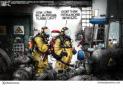
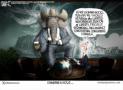
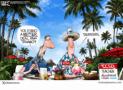
Profligate politicians have never met a multibillion-dollar infrastructure project they didn't like — except when it comes to President Donald Trump's border wall. Think about it. Boston's Big Dig black hole, the nation's most expensive highway project, burned through $25 billion and was plagued by deadly engineering incompetence, endless cost overruns, leaks, lawsuits and debt. California's high-speed rail boondoggle is a $100 billion bullet train to nowhere. Gov. Jerry "Moonbeam" Brown promised a 2020 completion date for the miracle transportation system. The latest estimates predict it won't open until at least 2033, and the costs keep rising. Seattle's ill-fated Alaskan Way Viaduct replacement topped out at $4 billion in local, state and federal funds for a two-mile bored road tunnel that will finally open next month — nearly four years behind schedule and hundreds of millions of dollars over budget. What the Big Dig, bullet train boondoggle and Seattle squander all have in common is that political elites, lobbyists and corporate heavy-hitters trampled over grassroots citizen opposition to get their way. Too many government construction projects are built because these publicly subsidized gravy trains reward campaign donors, powerful public employee unions and assorted control freaks in the urban planning and transportation sectors. Another glaring example? Across the country, voters have repeatedly rejected billion-dollar sports stadium and arena subsidies over the past 30 years — only to be sabotaged by bipartisan alliances overruling the will of the people. I used to run a watchdog website called "Porkwatch" filled with so many field-of-schemes case studies that I couldn't keep track of them anymore. Then there are all the tax-funded highways, bridges, museums and other edifices glorifying Beltway swamp creatures. The infamous Democratic Sen. Robert Byrd of West Virginia steered billions of federal dollars back to his home state, where more than 50 government buildings bear his or his wife's name — not to mention an eponymous telescope, multiple libraries and "lifelong learning centers," wellness centers, industrial parks, community centers, gardens, interchanges, highways, expressways, bridges, locks and a dam. A bas-relief sculpture of the alpha porker greets visitors at the Byrd dam, deemed unnecessary by locals. Not to be outdone, GOP Sen. Mitch McConnell has his own park; former Democratic Sen. John Dingell has his own transit center; the late Democratic Sen. Frank Lautenberg has his own rail station; tax cheat Democratic Rep. Charlie Rangel has his own tax-funded "Charles B. Rangel Center for Public Service" at the City College of New York; and the recently retired powerbroker Democratic Sen. Harry Reid sponsored billions of dollars in egotistical earmarks, including several million for a "research and technology park" named after him. Was there a swell of grassroots support for all these vanity projects? Was there overwhelming demand for the 10,000th long and windy road named after some blowhard incumbent hack? Wouldn't it be refreshing, for once, for the federal government to prioritize infrastructure that serves the national interest over special interests? And how about dedicating and consecrating this project in the memory of the thousands of Americans and law-abiding immigrants who have sacrificed their lives for our security? We've already got Adopt-a-Highway sponsors. Why not an Adopt-a-Wall program? Open borders academics and media propagandists keep lecturing that Americans don't want a wall. Yet, more than 325,000 citizens have raised $19.5 million in 22 days to fund the border that the Beltway obstinately refuses to fund. President Trump's defining battle against the Beltway to fortify our borders — by concrete, steel, increased manpower, electronic surveillance, all of it — isn't just about fulfilling a campaign promise. The wall is a necessary monument to sovereignty in a nation clogged with billions of dollars of worthless political monuments to Me, Me, Me. Michelle Malkin is host of "Michelle Malkin Investigates" on CRTV.com. |

Related Articles : |
