




|
|
|


















| Copper Wire Theft and Vandalism Epidemic Requires Federal Action |
 |
|
By Timothy H. Lee
Thursday, October 02 2025 |
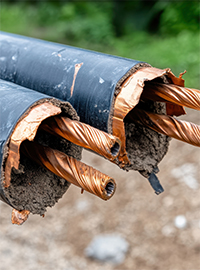
Across the nation, an underreported crisis continues to spread, and it merits quick Congressional action to combat it. The crisis in question is copper wire theft and related vandalism of telecommunications cables, utility lines, streetlight wiring and other infrastructure, which now constitute a nationwide epidemic. To opportunistic thieves, copper is merely another commodity for cash – easily cut, ripped away and sold. The consequences, however, aren’t trivial. What once might’ve been overlooked as petty crime has blossomed into a threat to public safety, local government budgets and the reliability of essential services. To grasp the seriousness of the growing problem, consider the loss of 911 connectivity when copper lines are severed, leaving emergency responders beyond contact and delaying or even preventing lifesaving assistance. Or imagine entire neighborhoods instantly plunged into darkness because streetlight wiring has been stripped, leaving families in unsafe conditions. In a less perilous but equally maddening example, vandals in Philadelphia severed cables and knocked out television service moments before the hometown Eagles played the Kansas City Chiefs in the Super Bowl, leaving fans scrambling to find alternative means during what should’ve otherwise been a unifying civic moment. The costs of copper theft and vandalism also ripple through communities in the form of higher utility bills, taxpayer-funded repair costs, replacement of control circuitry, public safety hazards and shaken trust in the reliability of the critical infrastructure that underpins our daily lives. Contractors now report that up to 8% of copper wiring in new construction is lost to theft, which causes schedule delays and skyrocketing bills. In terms of immediate life-and-death human cost, moreover, removing copper from live lines can lead to instant death via electrocution. Fortunately, states from California to Florida, as well as localities like Louisville, recognize the problem and are taking action. Remedies include toughening penalties for theft and vandalism, requiring sellers of bulk copper to substantiate legality of possession, requiring downstream actors like scrap metal recyclers to record sellers’ documentation and photograph vehicles and mandating that payments for sales be made by check mailed to sellers’ addresses. Without such laws, thieves rely on junkyards and recyclers who purchase copper without even cursory review. Accordingly, states and localities recognizing the growing crisis are finally making it more difficult for thieves to just anonymously offload stolen wires. Even the toughest state and local laws, however, leave gaps. Our nation’s copper wire infrastructure doesn’t respect state lines, with telecom lines, interstate power grids and other infrastructure crisscrossing state boundaries. Moreover, thieves operating across jurisdictions can exploit weaker laws in some states by funneling stolen material from other states into them for sale. Those gaps make federal action critical. Fortunately, a bipartisan group in Congress led by Representatives Laurel Lee (R – Florida) and Marc Veasy (D – Texas) has introduced the “Stopping the Theft and Destruction of Broadband Act,” H.R. 2784. That legislation would finally close the current loophole that limits federal protections to government-owned wires, explicitly bringing private infrastructure under federal criminal protection as well. The bill serves several additional essential purposes in recognizing the interstate nature of telecom infrastructure security. First, the new law would establish unequivocally that broadband lines constitute federal assets, thereby preventing states with weaker anti-theft and anti-vandalism laws from becoming safe havens. Second, a federal statute would boost cross-jurisdictional enforcement by empowering agencies like the Department of Justice (DOJ) and Federal Bureau of Investigation (FBI) to target multistate theft rings and dismantle scrap syndicates. Third, the law would improve deterrence by imposing higher-stakes penalties for interference with emergency communications, first responders and telecom infrastructure. Fourth, the bill would boost prevention by offering federal funding and matching grants to help municipalities and utilities retrofit vulnerable wiring, embed new anti-tampering sensors and adopt tagging and identification technologies on infrastructure vulnerable to theft. Finally, the law would offer greater legal clarity and reassurance for lawful actors in the recycling and scrap industries by helping them understand their responsibilities and reducing the risk of noncompliance. The proposed federal legislation need not displace state prevention efforts, but it can reinforce them. The Stopping Theft and Destruction of Broadband Act offers precisely the kind of nationwide backbone that today’s patchwork of state laws requires. If Congress fails to act, however, the costs of infrastructure theft and vandalism will only grow in the form of disrupted 911 service, internet connectivity disruptions, neighborhood blackouts and higher municipal repair bills. Accordingly, Congress must act to protect our infrastructure, literally save lives and send the message that we won’t allow our foundational infrastructure to be plundered for scrap. |
Related Articles : |
