




|
|
|

















24 October 2019
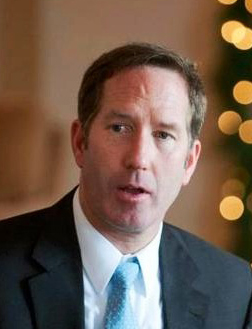
Timothy Lee, CFIF's Senior Vice President for Legal and Public Affairs, discusses why a solution to surprise medical billing must be undertaken without disrupting the patient experience or undermining the free market, and why Independent Dispute Resolution is a proven market-based solution.
0:00
0:00
Related Podcasts

30 September 2025
Paolo Carozza, Professor of Law at the University of Notre Dame and Co-Chair of the Oversight Board, discusses the independent Oversight Board’s role in providing rulings and recommendations on Meta’s platform postings, who comprises the board, how determinations are made, and the importance of transparency and platform accountability in the online digital space as they relate to free speech.

08 December 2023
Tom Pyle, President of the Institute for Energy Research and the American Energy Alliance, discusses government regulation of energy markets, why freely functioning energy markets are critical to the well-being of individuals and society, and the important work that is being done by the Save Our Cars Coalition.

09 September 2022
Rachel Greszler, Senior Research Fellow, the Grover Hermann Center at The Heritage Foundation, discusses unemployment numbers, whether a return of the "lost" workers could avert a recession, and how current policies to spend more, tax more, regulate more and produce less only make labor shortages and inflation worse.

08 July 2022
Ilya Shapiro, Senior Fellow and Director of Constitutional Studies at the Manhattan Institute, discusses attacks on the U.S. Supreme Court's legitimacy, when the freedom to speak becomes no freedom at all, and why he quit Georgetown University Law Center.
14 February 2020
Timothy Lee, Senior Vice President of Legal and Public Affairs at CFIF, discusses the DOJ's civil antitrust lawsuit seeking to block Sabre Corporation's acquisition of Farelogix, Inc., and why imported price controls for drugs is a prescription for failure.

03 July 2015
Brandon Arnold, Executive Vice President of the National Taxpayers Union, discusses the passage of the Trade Promotion Authority (TPA), its potential to reduce government burdens on trade and create more opportunity for America to lead internationally, and how the TPA is a much-needed tool for expanding market access and economic freedom.
