




|
|
|








Load Newer Podcasts












12 March 2020
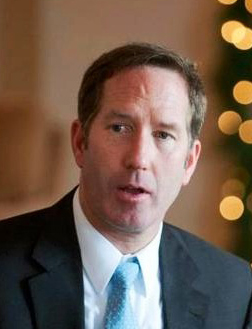
Nicolas Loris, Deputy Director of the Thomas A. Roe Institute for Economic Policy Studies and Herbert and Joyce Morgan Fellow in Energy and Environmental Policy at The Heritage Foundation, discusses the oil war between Russia and Saudi Arabia and its impact on the U.S. economy and markets.
06 March 2020
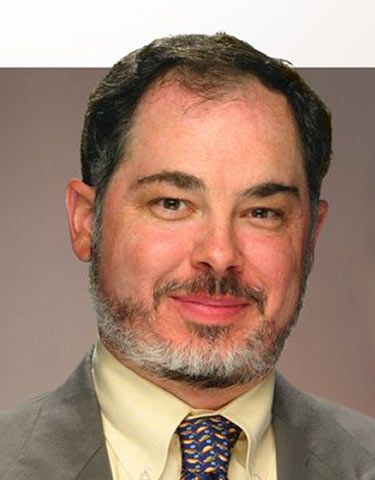
Sally Pipes, President, CEO, and Thomas W. Smith Fellow in Health Care Policy at the Pacific Research Institute, discusses the Supreme Court's decision to take up the Affordable Care Act case next term, the Democratic presidential candidates' health care positions and proposals, and how the coronavirus could break a "Medicare-for-All" system.
28 February 2020
Vinnie Vernuccio, Labor Policy Senior Fellow at the Mackinac Center for Public Policy's Workers for Opportunity, discusses the current status of right-to-work laws in the United States in the wake of the Supreme Court's 2018 decision in Janus v. American Federation of State, Country, and Municipal Employees, Council 31, and legislation currently under consideration in several states.
20 February 2020
Hans von Spakovsky, Manager of the Election Law Reform Initiative and Senior Legal Fellow at the Meese Center for Legal and Judicial Studies at The Heritage Foundation, discusses presidential legacies, why we have a strong commander-in-chief, how history will view President Trump's impeachment, and the issue of "voter suppression."
14 February 2020
Timothy Lee, Senior Vice President of Legal and Public Affairs at CFIF, discusses the DOJ's civil antitrust lawsuit seeking to block Sabre Corporation's acquisition of Farelogix, Inc., and why imported price controls for drugs is a prescription for failure.
31 January 2020
Bradley A. Smith, Chairman and Founder of the Institute for Free Speech, discusses Citizens United after ten years, the effects of the case over the last five election cycles and how politics is more diverse today.
24 January 2020
David Rivkin, Jr., a Partner at Baker & Hostelter, discusses the recent resolution passed by the House of Representatives purporting to restrict the president's power to wage war, how the power to declare war is different from the power to make war and what history teaches us.
23 January 2020
Bryan Riley, Director of National Taxpayer Union's Free Trade Initiative, discusses the latest developments in the U.S.-Mexico-Canada Agreement (USMCA), what it means for taxpayers, how the proposed changes impact intellectual property protections, and what may work in negotiating U.S. trade relations with China.
17 January 2020
William Conti, Partner at Baker & Hostetler in Washington, DC, discusses impeachment, who it helps and hurts, and the Democratic presidential primaries.
09 January 2020
Tzvi Kahn, Research Fellow at the Foundation for Defense of Democracies, discusses the U.S. strike on Qassem Soleimani, how it represents the most consequential development in the Middle East in recent history, what it means for U.S. relations with Iran, Iraq, North Korea and Russia, and what may be next.
19 December 2019
Timothy Snowball, Attorney at Pacific Legal Foundation, discusses separation of powers, the impeachment process and how the Framers of the Constitution intended for it to be used.
13 December 2019
Phil Kerpen, President of American Commitment, discusses why more heavy-handed government regulation of the internet is not needed and why the FCC's transparency rule as applied currently to Internet Service Providers might be the right model for so-called Big Tech.
05 December 2019
Ross Marchand, Director of Policy for the Taxpayers Protection Alliance, discusses the recently unveiled "Green Act," which would expand from 200,000 to 600,000 the per-manufacturer cap on tax credits for Electric Vehicle producers, and why this failed "green tax credit" should be phased out.
22 November 2019
Giselle Donnelly, Resident Fellow in Defense and National Security at the American Enterprise Institute, discusses Senator Elizabeth Warren's desire to "take a sharp knife" to defense budgets and what happens to the morale of the men and women in uniform with such steep cuts.
14 November 2019
Quin Hillyer, Columnist and Nationally Recognized Authority on the Political Process, discusses the fall of the Berlin Wall thirty years later and how we can teach younger Americans about the importance of the fall of the Wall and what it symbolized.
Scroll to load more
