




|
|
|












Load Newer Podcasts







30 November 2018
Phil Kerpen, President of American Commitment, discusses how Senate Republicans are blocking President Trump’s appointments.
29 November 2018
Tzvi Kahn, Senior Iran Analyst at the Foundation for Defense of Democracies, discusses new sanctions against Iran and a roadmap for a policy to sanction Iran's major human rights abusers.
29 November 2018
Lee Casey, Partner at Baker & Hostetler, discusses the Electoral College, the Senate and judicial independence following Brett Kavanaugh’s confirmation to the U.S. Supreme Court.
29 November 2018
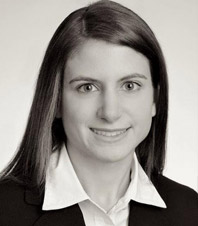
Anna St. John, an Attorney with the Center for Class Action Fairness at the Competitive Enterprise Institute, discusses oral arguments in Frank v. Gaos, a case challenging an unfair class action settlement that gives millions to attorneys and nothing to class members.
16 November 2018
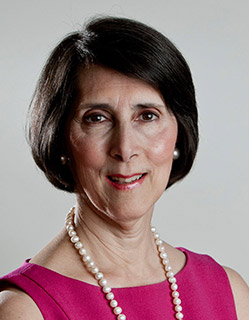
Karlyn Bowman, Senior Fellow at the American Enterprise Institute, discusses voters' views on key issues using the National Election Poll exit poll data, the presidential factor and the Kavanaugh confirmation.
16 November 2018
Trey Kovacs, Policy Analyst at the Competitive Enterprise Institute, discusses how the U.S. Department of Veterans Affairs has been paying certain employees to conduct labor union business on the taxpayer dime and how the agency announced it would be putting 430 medical professionals back to work for veterans.
16 November 2018
Hans von Spakovsky, Manager of the Election Law Reform Initiative and Senior Legal Fellow at The Heritage Foundation, discusses some of the positive changes Jeff Sessions made as Attorney General, why he deserves our nation's thanks and the rundown on candidates for his successor.
09 November 2018
Peter J. Wallison, Senior Fellow at the American Enterprise Institute and Author, discusses his latest book, "Judicial Fortitude: The Last Chance to Rein in the Administrative State," and how rulemaking by unelected officials affects the lives of Americans in profound ways.
09 November 2018
Hans von Spakovsky, Manager of the Election Law Reform Initiative and Senior Fellow at The Heritage Foundation, discusses the racial discrimination lawsuit against Harvard, who benefits from racial preferences and Supreme Court precedent on the issue.
02 November 2018
Timothy Lee, CFIF's Senior Vice President of Legal and Public Affairs, discusses a recent poll that shows a large majority of Americans self-censor their viewpoints and conceal their political activities, and why the IRS should not be permitted to collect sensitive private information on donors.
26 October 2018
Dr. William Lehr, Economist, Industry Consultant, and Research Associate at MIT, discusses how mobile network operators are transforming their networks to meet the 5G challenge and why the proposed merger between T-Mobile and Sprint should be regarded as pro-competitive and good for consumers.
26 October 2018
Dr. Fred M. Jacobs, Executive Vice President of St. George's University, Chair of the Department of Medicine and Former Commissioner of the New Jersey Department of Health and Senior Services, discusses doctor shortages and how international medical graduates are helping to fill needed positions in primary care and underserved areas.
26 October 2018
Fred Karlinsky, Co-Chair of Greenberg Traurig's Insurance Regulatory and Transactions Practice Group and Member of Florida's Constitution Revision Commission, discusses the amendments on the ballot in Florida to be voted on November 6th.
19 October 2018
Steve Bucci, Former Military Assistant to Defense Secretary Rumsfeld, Former Green Beret and Visiting Fellow at The Heritage Foundation National Security & Foreign Policy Institute, discusses the integrity of our elections, cybersecurity and the midterm elections.
19 October 2018
Myron Ebell, Director at the Center for Energy and Environment at the Competitive Enterprise Institute, discusses the recent report issued by the UN Intergovernmental Panel on Climate Change that warns the planet has only until 2030 to stem catastrophic climate change, what's missing from the report and why it is deemed scientifically political.
Scroll to load more
