




|
|
|

















Load Newer Podcasts









07 September 2017
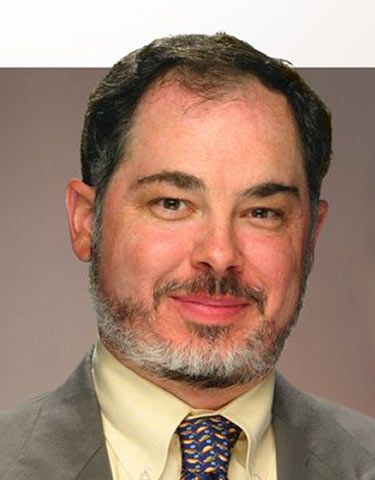
William J. Conti, Partner at Baker & Hostetler, discusses the 2020 presidential election and the scores of Democrats rumored as potential contenders.
01 September 2017
Nan Swift, Federal Affairs Manager for the National Taxpayers Union, discusses the important issues facing Congress when members return from August recess, why Congress should repeal the Independent Payment Advisory Board provision of ObamaCare, and why the EPA should waive the renewable fuel volume obligations.
01 September 2017
Hans von Spakovsky, Manager of the Election Law Reform Initiative and Senior Legal Fellow at the Meese Center for Legal and Judicial Studies at The Heritage Foundation, discusses the U.S. Department of Justice's potential investigation into racial discrimination by some American universities, how some universities are destroying their admissions records, and how the IRS is refusing to turn over names of individuals who were involved in targeting certain non-profit organizations.
01 September 2017
Sarah Westwood, White House Reporter for Washington Examiner, discusses what it is like inside the White House Press Room, President Trump's relationship with Republicans, and what Hillary Clinton may hope to accomplish with her latest book.
24 August 2017
Adam Michel, Policy Analyst at the Thomas A. Roe Institute for Economic Policy Studies at The Heritage Foundation, discusses America’s high corporate tax rate and who really picks up the tab, and the need for Congress to move on overall tax reform following the August recess.
24 August 2017
Angela Logomasini, Senior Fellow at the Competitive Enterprise Institute, discusses how President Trump is right to set a precedent for sound science by refusing to ban certain pesticides that protect crops and ensure affordable food for Americans, and how environmental activists continue to "bee" wrong about honeybee health challenges.
24 August 2017
Phil Kerpen, President of American Commitment, discusses U.S. Senator Robert Menendez's upcoming felony criminal trial and how it will impact Democrats and control of the United States Senate.
18 August 2017
Tzvi Kahn, Senior Iran Analyst at the Foundation for Defense of Democracies, discusses Iran's sentencing of another U.S. hostage to ten years in prison, what we learn from North Korea that can be applied to Iran, and how sanctions impact negotiations.
18 August 2017
Quin Hillyer, Contributing Editor of National Review Magazine, a Senior Editor for The American Spectator magazine, and nationally-recognized authority on politics, discusses why cursive writing is making a comeback, why the Senate should write another ObamaCare repeal bill quickly, and the tragic events in Charlottesville, Virginia.
18 August 2017
Timothy Lee, CFIF's Senior Vice President for Legal and Public Affairs, discusses Al Gore's efforts to encourage America's decreased energy consumption as compared to his own usage, a comparison of retail electricity prices worldwide, and how the U.S. stacks up with other nations on median income.
11 August 2017
Curtis Kalin, Communications Director and Spokesman for Citizens Against Government Waste, discusses the recently released 2017 Congressional Pig Book, CAGW's 25th edition on pork-barrel spending, and how the earmark "moratorium" has rendered the process patently less transparent.
11 August 2017
Anthony Ruggiero, Senior Fellow at the Foundation for Defense of Democracies, discusses why North Korea cannot be trusted, the role of China and Russia in the denuclearization efforts of North Korea, and why the U.S. should send a message to countries doing business with Pyongyang.
04 August 2017
Phil Kerpen, President of American Commitment, discusses why President Trump should direct the Office of Personnel and Management to rescind the Obama-era rule that allows Congress to masquerade as a small business, forcing taxpayers to heavily subsidize health insurance for members and staff.
04 August 2017
Timothy Lee, CFIF's Senior Vice President of Legal and Public Affairs, discusses what makes arbitration so valuable and why Congress should reverse recently published rules promulgated by the Consumer Financial Protection Bureau that will result in an avalanche of class-action lawsuits.
28 July 2017
Steve Milloy, Junk Science Commentator and Author, discusses his latest book, "Scare Pollution: Why and How to Fix the EPA," and why the Trump administration's decision to begin replacing a small army of outside science advisers at the EPA is a step toward scientific integrity.
Scroll to load more
