




|
|
|



Load Newer Podcasts



23 March 2016
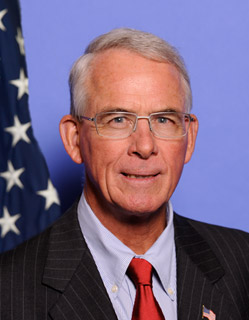
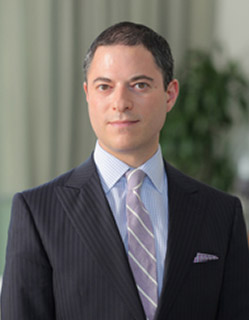
Ambassador Francis Rooney, Former U.S. Ambassador to The Holy See, Author and Foreign Policy Expert, discusses recent terror attacks and explains that the United States is a nation at war, what should be done to limit the ongoing threats posed by ISIS and Islamic extremism, and other foreign policy current events.
23 March 2016
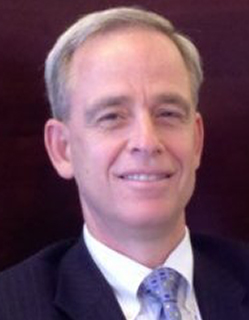
Nathan Nascimento, Senior Policy Advisor at Freedom Partners, discusses his organization's "2016 Obamacare Deductible Increase Tracker," and the double-digit premium increases and cancelled plans resulting from the Affordable Care Act.
18 March 2016
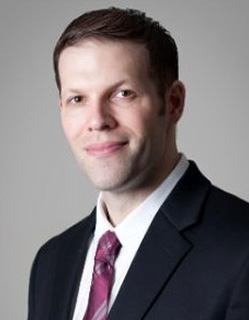
Roslyn Layton, a Visiting Fellow at the American Enterprise Institute's Center for Internet, Communications, and Technology Policy, discusses the FCC's latest effort to regulate privacy, why it constitutes overreach by the agency, and how the privacy rules for Internet service providers will limit competition in the online advertising market.
18 March 2016
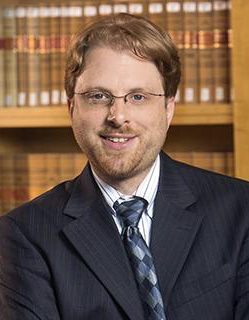
Jonathan Wood, Staff Attorney at Pacific Legal Foundation, discusses the Professional and Amateur Sports Protection Act, as well as the constitutional questions surrounding the state by state discrimination in sports betting laws.
18 March 2016
Thomas Pyle, President of the American Energy Alliance, discusses why governors and other state officials should immediately cease all efforts to comply with Obama's so-called "Clean Power Plan" following the Supreme Court's recent decision to put on hold the EPA's sweeping federal carbon mandates and why the failure to issue "stop work orders" risks wasting millions of taxpayer dollars.
11 March 2016
Andrew Grossman, Partner in the Washington, DC, office of Baker & Hostetler, discusses President Obama's lawless Clean Power Plan.
04 March 2016
Dean A. Reuter, Vice President and Director of Practice Groups at The Federalist Society, discusses how the explosive growth of the federal government impacts all branches of government (including the Supreme Court), why the stakes are extremely high for the next SCOTUS appointment, and his latest book co-authored with Professor John Yoo, "Liberty's Nemesis: The Unchecked Expansion of the State."
26 February 2016
Seth Cooper, Senior Fellow at The Free State Foundation, discusses what is wrong with the Federal Communications Commission's proposed rule to "unlock set top boxes," how it is going to impact programming and why the government should not be allowed to pick winners and losers.
26 February 2016
Gus Hurwitz, Visiting Fellow at the American Enterprise Institute's Center for Internet, Communications, and Technology Policy, discusses the ongoing standoff between Apple and the FBI, and the balance between security and privacy.
26 February 2016
Timothy Lee, CFIF's Senior Vice President of Legal and Public Affairs, discusses election results in South Carolina and Nevada, and what may lie ahead for the candidates leading up to Super Tuesday.
19 February 2016
Ambassador Terry Miller, Director of the Center for Trade and Economics for The Heritage Foundation, discusses why the United States fell in rank to a second-tier "mostly free" economy ---- tying its all-time low score - and what the U.S. must do to change course.
19 February 2016
Aparna Mathur, Resident Scholar at the American Enterprise Institute, discusses the January jobs report, why we see a high teenage unemployment rate and not much movement in the long-term unemployed, and what the report means for America.
12 February 2016
In an interview with CFIF, Bradley A. Smith, Chairman and Founder of the Center for Competitive Politics and Former Chairman of the FEC, discusses campaign finance law 40 years after the Supreme Court's seminal decision in Buckley v Valeo and why "big money" isn't buying this election.
12 February 2016
Sarah Westwood, Watchdog Reporter for the Washington Examiner, discusses the controversy surrounding Hillary Clinton's paid speeches to private groups, what is different about the use of personal e-mail accounts by former Secretaries of State Colin Powell and Condoleezza Rice as compared to Hillary Clinton, and the finger-pointing and mudslinging on the GOP side of the campaign trail.
12 February 2016
Quin Hillyer, Contributing Editor of National Review magazine, Senior Editor for The American Spectator magazine and Political Commentator, discusses the sore losers of the GOP post Iowa, Donald Trump and New Hampshire values, and which quarterbacks should be considered a GOAT or BOAT (the Greatest of All Time or the Best of All Time) post Super Bowl 50.
Scroll to load more
