America as we know it was built largely upon and because of our rail industry, and today it remains…
CFIF on X CFIF on YouTube
So-Called "Railway Safety Act" Constitutes a Political Handout to Big Labor That Does Nothing to Improve Safety At All

America as we know it was built largely upon and because of our rail industry, and today it remains a pillar of our economy.

Unfortunately, a destructive proposal before Congress misleadingly named the "Railway Safety Act" (RSA), part of broader surface transportation reauthorization, threatens great harm to our railroads.

Simply put, the bill has nothing to do with improving safety, but has a lot to do with advancing the political agenda of Big Labor.  At a moment when inflation burdens American families and fragile supply chains remain vulnerable to disruption, the last thing our economy or rail sector need is another costly federal mandate imposed upon one of the nation’s most important transportation sectors.

As an initial matter, as noted by The Wall Street Journal, the…[more]

May 20, 2026 • 04:28 PM
Home Jester's Courtroom "But" He Didn't Mean to Call Him
"But" He Didn't Mean to Call Him Print
Wednesday, April 11 2018

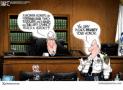
A Georgia man is suing his boss for invasion of privacy when his boss overheard negative comments the man made to his wife after the man "butt" dialed his boss.

James Stephens claims he inadvertently dialed back his boss, Michael Coan, after finishing a late evening call with him. During the second ("butt" dial) call, which lasted roughly 12 minutes, Coan overheard James complaining about him to his wife. The next day, Coan confronted James about the call and gave him the choice to resign or be fired.

Now, James and his wife are suing Coan for eavesdropping, claiming Coan invaded their right to privacy with "voyeuristic eavesdropping." Coan, who works for the State of Georgia, filed a motion to dismiss the suit arguing he was acting in his official capacity as a state supervisor when he was listening to the pocket-dialed call of a subordinate employee and, thus, deserves immunity.

According to news reports, the Sixth Circuit U.S. Court of Appeals ruled in 2015 on a similar case, opining that someone who pocket dials another person does not have a reasonable expectation of privacy because they placed the call.

Source: cbsnews.com

Notable Quote   
 
"What is it with Democrats and their fake supporters, fake accents, fake backgrounds, fake accomplishments? Is it because they think voters are that shallow and stupid? Or because they don't want anyone to know how incredibly out of touch they are with regular Americans?This week, to cite just the most recent example, a group of 'Republicans for Talarico' disbanded after it turned out that they were…[more]
 
 
— Issues & Insights Editorial Board
 
Liberty Poll   

How often do you use one of the current commonly available AI services for any purpose?