




|
|
|









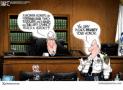
| Lindsey Graham Desperately Tries to Become Cool with Global Warming |
 |
|
By Timothy H. Lee
Thursday, October 15 2009 |
Do you ever get the sense that Senator Lindsey Graham (R-SC) was the last person to buy bell-bottoms and a Rubik’s Cube in 1983 because he thought it might make him cool? It’s sad enough that Senator Graham desperately and perpetually seeks acceptance from the effete media class, using transparent “bipartisan” policy positions as his tool. But his clumsy sense of timing makes it all the more pathetic. Just this past Friday, even the British Broadcasting Corporation (BBC) discredited climate-change alarmism with an article entitled What Happened to Global Warming?. And here in Washington, Congressional Budget Office (CBO) Director Douglas Elmendorf warned that carbon-tax legislation will impose “significant” costs upon the already weakened American economy. But once again displaying his poor sense of timing and philosophical unseriousness, Senator Graham chose this week to jump head-first onto the wobbling global warming bandwagon. In a New York Times commentary that he chose to co-author with Senator John Kerry (D-MA), he called for… costly global warming legislation. Even more shamefully, he exposed his man-crush on Barack Obama by entitling his piece, Yes We Can (Pass Climate Change Legislation). Meanwhile, everybody else seems to be catching on to the fraud that is climate-change alarmism. Just two days prior to Senator Graham’s New York Times commentary, the BBC asked “what happened to global warming?” In a moment of unintentional humor, reporter Paul Hudson described what he considered “a bit of a surprise”: “What happened to global warming? This headline may come as a bit of a surprise, so too might the fact that the warmest year recorded globally was not in 2008 or 2007, but in 1998. But it is true. For the last 11 years we have not observed any increase in global temperatures. And our climate models did not forecast it, even though man-made carbon dioxide, the gas thought to be responsible for warming our planet, has continued to rise. So what on Earth is going on?” In other words, the past ten years has witnessed an unprecedented period of carbon emission and economic growth while China and India industrialized, yet global temperatures have actually declined. The article wisely notes the thirty-year global cooling period from 1945 to 1977, which coincided with the now-discredited 1970s “global cooling” alarmism. Which, of course, preceded “global warming” alarmism just a few short years later. One would think that Senators Graham and Kerry would possess a better sense of recent history and fundamental climate data before making fools of themselves on the pages of The New York Times. But alas, scientific fact and lessons of history are mere speedbumps in Senator Graham’s desperate campaign for Beltway popularity. Even more inconveniently for Senators Graham and Kerry, the CBO this week exposed some of the inevitable costs of the legislation that they advocate. In their commentary, Senators Graham and Kerry arrogantly assure us that their carbon-tax proposal “will revitalize our economy, protect current jobs and create new ones.” Not true, says the CBO. In its trademark understated manner, the CBO analysis reports that climate change legislation will “reduce economic activity through a number of different channels.” Quoting the report, it states that a cap-and-tax bill will: - Reduce the productivity of existing capital and labor, which are currently geared to relatively inexpensive energy; “Taken together,” Mr. Elmendorf says, “those changes would affect the levels and composition of gross domestic product and employment and would thus influence households’ economic well-being.” Other than reducing American households’ well-being, income, labor and capital productivity, investment, capital inflows, supply of labor and tax fairness, though, climate change legislation is a fantastic idea. But look at the positive side. At least Senator Graham has renewed his popularity within the elitist cocktail circuit.
|


Related Articles : |
