



|
|
|









| A Victory for Free Speech or More of the McCain? |
 |
|
By Sam Batkins
Thursday, September 10 2009 |
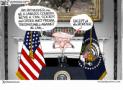
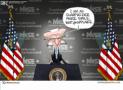
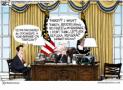
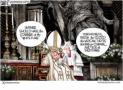
This week, the U.S. Supreme Court heard arguments in Citizens United v. Federal Elections Commission. Rarely has a 90-minute argument meant so much for the cause of free speech. In fact, a “proper” disposition of the case could sweep McCain-Feingold’s anti-free speech legislation where it belongs, into the dustbin of history. The oral argument this week is actually the second time the Supreme Court has heard the case this year. The difference this time, however, was that the Court asked the parties to address the constitutionality of McCain-Feingold’s “electioneering communication” provision directly. Under the Gordian Knot of federal regulations created by McCain-Feingold, communication to the public was divided up into three categories. First, there is express advocacy: “Vote for Candidate X” or “Defeat Candidate Y.” Second, there is issue advocacy: “X is an unwise policy decision.” And, finally there is a middle ground that often strangles even the most benign speech: the “electioneering communication” provision under Section 203 of the law. Section 203, according to the twisted guise of federal regulators, means 1) “any broadcast” advertisement that refers to a candidate for election, 2) is distributed 60 days before a general election or 30 days before a primary election, and 3) is targeted to the relevant electorate. Even though the purpose of a broadcast ad might be issue advocacy, if it even mentions a candidate, then it could fall within the maddening rubric that is “electioneering communication.” In addition, the troubling 2003 decision of McConnell v. FEC, which upheld McCain-Feingold and its “electioneering communication” provision, also expanded the statutory language somewhat to include the “functional equivalent” of “electioneering communication,” further dampening free speech rights. What does this mean for free speech advocates? Well, during the first oral arguments heard by the Court in Citizens United earlier this year, some of the justices indicated that Congress and the FEC might have taken speech regulation to new highs (or lows, depending on your perspective). Indeed, the justices went so far as to ask if a hypothetical 500-page book that reviewed the life and times of a Senator were published (read, “broadcast” under bureaucratic jargon) within 30 days of a general election, and on page 250 of the book the text read: “Vote for X,” would the book then fall under the provisions of the law and be banned? Thankfully for the First Amendment, the Court might finally realize that the current state of campaign finance regulation is the result of an ugly marriage between Congress and federal regulators, inflamed by the tortured logic of fractured Supreme Court opinions. As eight former FEC Commissioners noted in their amicus curiae brief (a document filed by interested parties urging the Court to rule a certain way) to the Supreme Court, the current state of McCain-Feingold is untenable. They noted, “The pristine simplicity of the First Amendment’s proscription of any law abridging speech yielded first to urgent circumstances, but now is replaced by a flood of complex restrictions. The complexity requires citizens to hire specialists to speak. Specialists cost money. Errors risk penalties. Core political speech is chilled.” During this week’s oral arguments, Justice Antonin Scalia was especially suspicious of the government position supporting McCain-Feingold. Justice Scalia noted that it is the government that has the burden, through a compelling interest, to prove speech should be suppressed. Justice Scalia went further by stating, “We are suspicious of Congressional action in the First Amendment area precisely because I doubt that one can expect a body of incumbents to draw election restrictions that do not favor incumbents. Is that excessively cynical of me? I don’t think so.” The government attorney (shockingly) disagreed, and the audience let out a cynical laugh of its own. With any hope, the Justices are currently in conference debating the end of Section 203 and a large chunk of current campaign finance reform regulations. As the holiday season approaches in December, free speech advocates could awake to a present that should never have been taken away in the first place: the right to petition one’s government for the redress of grievances and speak out against offensive policies and reprehensible politicians, especially those who seek job security by silencing their critics with the threat of jail time. By December, or perhaps sooner, we will all know whether the tenets of “Congress shall make no law” are still sacrosanct, or whether the Court will bow to Congress and extend McCain-Feingold’s failure further into the First Amendment’s uncertain future. |

Related Articles : |
