




|
|
|

















| The Feds Criminalize Ordinary Life |
 |
|
By Quin Hillyer
Wednesday, September 28 2011 |
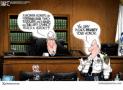
Finally, some front-page attention to a major, and frightening, American problem! Tuesday’s Wall Street Journal featured an in-depth look at how federal laws increasingly apply criminal penalties for violations involving no mens rea, roughly translated as a “guilty mind.” The stricture against criminal penalties for unwitting violations is an age-old, bedrock legal principle. Alas, in today’s dangerously armed, bureaucratic super-state, ancient legal principles go by the wayside when politicians pretend to be “tough on crime” and when officious civil “servants” indulge their fetishes for power. U.S. governments at every level these days are prone to “overcriminalization,” which means turning ordinary activity into violations of the law, turning what should be civil violations into criminal ones, and applying penalties far harsher than should be warranted. On the mens rea front, the Journal explains: “In recent decades, Congress has repeatedly crafted laws that weaken or disregard the notion of criminal intent. Today not only are there thousands more criminal laws than before, but it is easier to fall afoul of them…. Today, there are an estimated 4,500 crimes in federal statutes, plus thousands more embedded in federal regulations.” The Journal highlighted the case of Wade Martin, who legally hunted sea otters but then sold them to a person not qualified to buy them (Martin says he thought the buyer was legal). Another man was charged with illegal ownership of a firearm for keeping a single bullet (no gun) in a box in his room. Yet another, Robert Eldridge, accidentally caught a humpback whale in his fishing net, took care to free the whale, but was unable to remove about 30 feet of netting from the whale’s body. He was criminally charged because he failed to contact authorities to find a trained rescuer to finish removing the net. These stories are just a microcosm of the problem. In 2010 I contributed a single chapter to the Heritage Foundation book, One Nation Under Arrest: How Crazy Laws, Rogue Prosecutors and Activist Judges Threaten Your Liberty. I wrote of how Krister Evertson, an inventor trying to produce an environmentally friendly fuel cell, was first arrested for putting the wrong label on an otherwise perfectly legal mailing package – and then imprisoned for improperly “disposing” of an environmental hazard that he had not actually disposed of and that was stored in a non-hazardous fashion. Other horror stories in the book included that of a 71-year-old imprisoned for importing otherwise legal orchids without proper paperwork, the honor student arrested for having a “weapon” on school grounds (while she moved into her own apartment, a kitchen knife had fallen behind the seat of a car she then parked on campus), the grandmother arrested because her bushes were too high and the seafood importer imprisoned for eight years because he packed lobster tails in plastic instead of cardboard. The orchid and lobster cases involved violations of one of the most idiotic laws imaginable, the Lacey Act, aimed against “trafficking” in wildlife and plants in ways that – get this – violate not U.S. laws but the laws of foreign nations. This is the same law being used, and abused, by the crypto-criminal conspiracy known as the Obama/Holder Justice Department to conduct the now-infamous raid on Tennessee’s Gibson Guitar factory. More often than not, these arrests are carried out by gun-wielding thugs in uniform, with the alleged violators treated like murderous madmen rather than ordinary citizens with weak record-keeping skills. Who knew, after all, that even the Small Business Administration and the Railroad Retirement Board need armed agents? That’s at the federal level. At the local level, oft-poorly-trained SWAT teams proliferate unnecessarily, leading to far too many stories like the notorious one of the small-town Maryland mayor whose dogs were killed and family abused in a mistaken drug raid. The overproliferation of federal criminal laws and regulations (the U.S. system was designed to keep most criminal statutes at the state and local level), combined with the extreme weakening of mens rea requirements, now means that ordinary Americans on average commit “three felonies a day.” That is the conclusion of noted lawyer Harvey Silverglate, whose 2009 book of that title makes the point that all of us, without ill intent, act in our everyday lives in numerous ways that are “potentially criminal.” Ordinary life should not be treated as a criminal conspiracy. Former U.S. attorney generals Ed Meese and Richard Thornburgh asked Congress last winter merely to ensure that any bills carrying criminal penalties be referred to the Judiciary Committee for review. To their great discredit, the House GOP leadership failed to adopt such a rule. In truth, Congress should do far more. It should undertake a comprehensive review of the federal criminal code – and perform some radical liposuction on it. |

Related Articles : |
