




|
|
|

















Load Newer Podcasts











29 November 2013
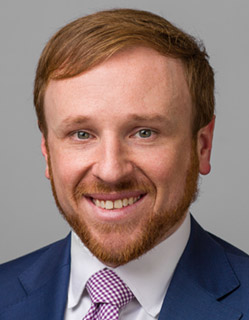
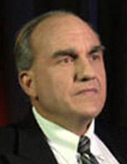
Aloysius Hogan, Senior Fellow at the Competitive Enterprise Institute, discusses recent effort to repeal laws that require workers to pay union dues as a condition of employment, why union membership offers little value, and a Supreme Court challenge to union practices.
29 November 2013
Timothy Lee, CFIF's Senior Vice President, discusses why America's copyright system is not broken and presidential politics looking forward to 2016.
21 November 2013
Peter J. Ferrara, Carleson Center for Public Policy Senior Fellow and former advisor to Presidents Reagan and Bush, discusses how the Obama Administration and the progressive movement have been selling the American people two big lies - ObamaCare and Global Warming - and how in both cases the American people are going to see fewer jobs, more regulations and decreased liberties.
21 November 2013
Jennifer Gratz, the lead plaintiff in the landmark case Gratz v. Bollinger that challenged affirmative action at the University of Michigan and co-founder of the XIV Foundation and Equal Protection Advocates, discusses the case currently before the U.S. Supreme Court challenging Michigan's constitutional ban on racial preferences, Schuette v. Coalition to Defend Affirmative Action, and her efforts to end programs in public education, employment and contracting that grant preferential treatment based on race or sex.
14 November 2013
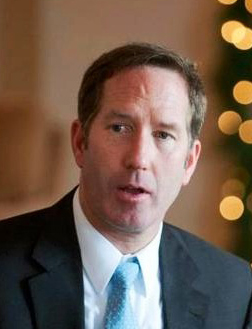
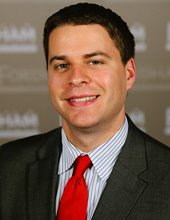
Michael Brickman, National Policy Director at the Thomas B. Fordham Institute, discusses Common Core, the national education curriculum adopted by 45 states and the District of Columbia, and the impact of Common Core on American competitiveness.
14 November 2013
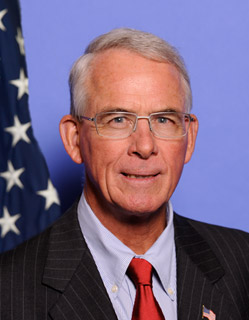
Francis Rooney, former U.S. Ambassador to the Holy See, discusses his book, "The Global Vatican: An Inside Look at the Catholic Church, World Politics, and the Extraordinary Relationship between the United States and the Holy See."
07 November 2013
Lawrence McQuillan, Senior Fellow at the Independent Institute, explains why ObamaCare will fail and free-market healthcare will succeed, and discusses the book 'Priceless: Curing the Healthcare Crisis,' which identifies the key problems with and corresponding solutions to ObamaCare.
07 November 2013
Andrew Moylan, Outreach Director at R Street Institute, discusses why Congress is missing a prime opportunity to cut spending and make commonsense reforms with the Farm Bill, and how unfortunately for taxpayers, consumers and farmers it will result in keeping the status quo and rewarding special interests.
31 October 2013
Dr. Peter Vincent Pry, Executive Director of the Task Force on National and Homeland Security, discusses the dramatic increase in cyber activity targeting U.S. computers and systems and the potential impact a nuclear or natural electromagnetic pulse catastrophe could have on America.
31 October 2013
Romina Boccia, Grover M. Hermann Fellow in Budgetary Affairs at The Heritage Foundation, discusses federal spending and debt, Social Security and the debt limit, and the proposed trade agreement between the United States and the European Union.
25 October 2013
Troy Senik, CFIF Senior Fellow and Senior Editor at Ricochet, discusses the disastrous ObamaCare roll-out, lack of confidence that the system can be fixed and infighting in the GOP in the wake of the shutdown.
25 October 2013
Sam Kazman, General Counsel of Competitive Enterprise Institute, discusses the federal lawsuit challenging, among other things, the IRS's authority to distribute taxpayer subsidies under certain provisions of the Affordable Care Act, specifically in states that have opted not to create state exchanges.
17 October 2013
John Lott, conservative economist and best selling author, discusses his latest book, "Dumbing Down the Courts: How Politics Keeps the Smartest Judges Off the Bench," and why confirmations have been getting tougher for all federal judicial nominees.
17 October 2013
Dan Epstein, Executive Director of Cause of Action, discusses the risks Americans face in disclosing their personal medical and financial information on the ObamaCare exchanges and the risk of waste, fraud and abuse of hundreds of millions of taxpayer dollars states are receiving to run their exchanges.
14 October 2013
Megan Brown, Partner at Wiley Rein LLP, discusses the Supreme Court's new term and reviews the extraordinary series of cases on consequential constitutional issues, including affirmative action, campaign finance, the First Amendment, criminal law and environmental law.
Scroll to load more
