




|
|
|












Load Newer Podcasts








13 June 2014
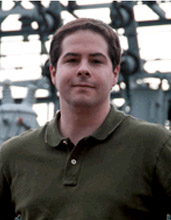
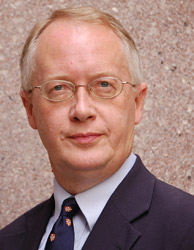
Timothy Lee, CFIF's Senior Vice President of Legal and Public Affairs, discusses net neutrality and the misguided push to have the federal government regulate broadband Internet under Title II of the Communications Act.
13 June 2014
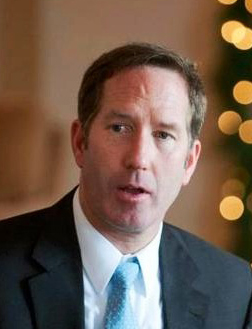
Paul Kersey, director of labor policy at the Illinois Policy Institute, discusses the Supreme Court case of Harris v. Quinn, which potentially could force countless Medicaid recipients who care for sick or disabled family members to be forced to join the SEIU, and why such a ruling would be wrong and violative of First Amendment freedom of speech and association.
06 June 2014
Lance Brown, Executive Director of Partnership for Affordable Clean Energy, discusses the EPA's misguided attempt to regulate carbon dioxide emissions from existing power plants, the costs associated with the recent proposal, and why President Obama is wrong in suggesting that reducing carbon will prevent asthma or heart attacks.
06 June 2014
Erin Murphy, partner at Bancroft PLLC, discusses her successful legal argument before the U.S. Supreme Court in McCutcheon v. FEC, in which the Court held the federal aggregate limits on campaign contributions unconstitutional, and her work on Bond v. United States, a case recently decided by the Court involving a poisoned mailbox.
30 May 2014
Marita Noon, Executive Director of Energy Makes America Great, discusses the latest dubious efforts by extreme environmentalists to keep private property owners from selling, developing or using their land.
23 May 2014
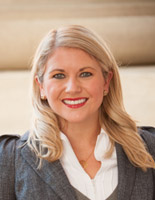
Caitlin Poling, Director of Government Relations at the Foreign Policy Initiative, discusses terrorism in Africa, the kidnapping situation in Nigeria and why in 2012 then Secretary of State Hillary Clinton decided Boko Haram did not warrant a foreign terrorist organization designation.
15 May 2014
Timothy Sandefur, Principal Attorney at the Pacific Legal Foundation, discusses the conflict between an individual's right to freedom and the power of the majority to govern, economic liberty and his latest book, "The Conscience of the Constitution: The Declaration of Independence and the Right to Liberty."
08 May 2014
Allen Dickerson, Legal Director at the Center for Competitive Politics, discusses why the California Attorney General's demand for the list of supporters to a non-profit organization damages freedom of association, violates the clear terms of a federal tax law and ignores the Supremacy Clause of the United States Constitution.
02 May 2014
Phil Kerpen, President of American Commitment, discusses damaging emails between IRS official Lois Lerner and DOJ employees, misleading numbers in ObamaCare, and another delay with the Keystone XL Pipeline.
25 April 2014
Jennifer Gratz, founder and CEO of XIV Foundation, discusses Michigan's constitutional ban on race and gender-based affirmative action policies and the U.S. Supreme Court case of Schuette v. Coalition to Defend Affirmative Action.
16 April 2014
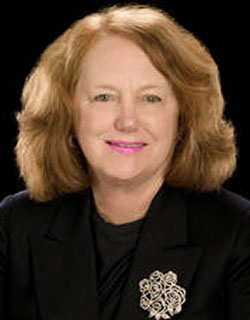
Sally Pipes, President, CEO and Taube Fellow in Health Care Studies at the Pacific Research Institute, discusses how the Obama Administration's enrollment figure celebration for ObamaCare's insurance exchanges is premature, why four years of ObamaCare failures is long enough and her testimony before the U.S. Senate on what the U.S. health care system can learn from other countries.
16 April 2014
Myron Ebell, Director of the Competitive Enterprise Institute's Center on Energy and Environment, discusses how wind companies are still reaping benefits from taxpayers despite the expiration of the multi-billion dollar wind energy production tax credit and the contradictory positions in the United Nation's new report on Global Warming.
11 April 2014
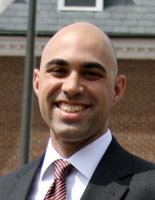
Robert Zarate, Policy Director of the Foreign Policy Initiative, discusses the U.S. response to Russia's continued aggression in Ukraine, Russia's end game and what's next.
11 April 2014
Timothy Lee, CFIF's Senior Vice President of Legal and Public Affairs, discusses what is wrong with the NLRB's regional ruling that scholarship football players are employees and eligible to form a union.
04 April 2014
Lana Harfoush, Director of Communications and Marketing for the Moving Picture Institute, discusses EconPop, a new YouTube web series, hosted by comedian Andrew Heaton, which uses humor to examine how popular films portray economic ideas.
Scroll to load more
