




|
|
|











| Debunking the Walter Cronkite “That’s the Way It Is” Media Myth |
 |
|
By Timothy H. Lee
Thursday, February 12 2026 |
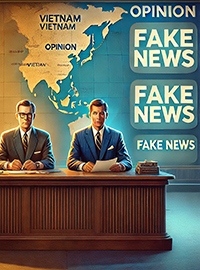
Another downsizing at The Washington Post has triggered predictable lamentations and nostalgic commentaries for days past when Americans actually trusted the mainstream media. Those lamentations typically cast it as a loss of “journalistic grandeur” attributable to the sterile corporatism of Post owner Jeff Bezos, which in turn echo decades of invocation of Walter Cronkite, as if his name alone secures the image they wish to conjure. “And that’s the way it is,” we were lectured, with Cronkite lionized as “The Most Trusted Man in America” and a patron saint of objectivity, somehow hovering above partisanship. That offered a soothing myth, but it was just that: a myth. To be sure, Cronkite was no cartoonish villain, nor was he uniquely ideological for his era. The persistent claim that he somehow embodied some idyllic age of media objectivity, however, collapses under even mild scrutiny. The reality is that he actually helped pioneer the very same blurring of reporting and subjective commentary that today’s legacy media pretends it doesn’t do, even while doing it daily. The most infamous example arrived in early 1968, when Cronkite traveled to Vietnam following the Tet Offensive and returned to deliver what he presented as sober analysis. Instead, his viewers received a personal verdict that the war was mired in stalemate and likely unwinnable. That wasn’t an objective recitation of military facts, but rather an anchorman’s subjective conclusion about American strategy and prospects. Millions of South Koreans can be thankful today that similar commentary fifteen years earlier didn’t consign them to the communist misery suffered later by South Vietnamese. Ironically, Tet was actually a catastrophic military defeat for the North Vietnamese and Viet Cong forces. While suffering staggering casualties, they failed to spark an anticipated uprising within South Vietnam. Cronkite’s framing, however, suggested futility and quagmire. When America’s most famous news anchor shifted from reporting to offering strategic pronouncements, he was no longer merely informing opinion, but sculpting it. Cronkite’s journalistic leap subsequently became a broader media template. Fast-forward a half-century, and the line between objective reporting and commentary hasn’t merely blurred, it has dissolved. Outlets routinely present ideological framing as neutral fact, typified by the Post’s own preposterously misnamed “Fact Checker.” We at CFIF experienced the Post’s odious “Fact Checker” bias firsthand, and a recitation of that experience merits reading. In any event, the Post’s decline hasn’t occurred in a vacuum. Rather, it reflects a broader dynamic of advocacy disguising itself as dispassionate analysis, which has earned the media record low measures of public trust. Americans no longer believe that they’re receiving straight news, but a framing bias and a pervasive homogeneity that tilts coverage in a leftist direction. The same institutions that nostalgically invoke Cronkite as the embodiment of past trust have been repeating on an industrial scale the very practice that he helped normalize: the confident substitution of subjective opinion for more objective reporting. To illustrate where we now find ourselves, it took a kid with a cellphone camera in Nick Shirley to expose the welfare fraud occurring in the Somali communities of Minnesota. Where were well-staffed news teams like the Post? It therefore shouldn’t bewilder anyone when subscription numbers and viewership sag, followed by layoffs and decline in public trust. That’s simply rational customer and market feedback. Furthermore, it doesn’t mean that Americans have lost interest in news. It simply reflects how Americans gradually lost confidence that they were receiving the whole story or an objective story. In an increasingly diversified and competitive marketplace, credibility is currency. Squander that credibility long enough, and insolvency – of both the financial and reputational variety – follows. Accordingly, the mainstream media’s ongoing decline shouldn’t be mischaracterized as the tragic abandonment of objective journalism in favor of heartless corporatism. Absolute objectivity may be unattainable, as human beings possess differing perspectives and must make tough editorial judgments. A vast difference exists, however, between acknowledging human limitations and false canonization of figures like Cronkite to disparage the free consumer news marketplace. Cronkite’s legacy is thus properly understood as more of a transitional figure, one who demonstrated how a trusted anchor could shape national debate through subjective opinion. That lesson was slowly absorbed by ensuing generations of journalists who found shaping narratives more intoxicating than merely reporting facts. Thus, as public trust in media sinks to new record lows, the explanation doesn’t demand exotic theories. It requires media figures to look in the mirror. “And that’s the way it is” only endures if viewers believe it. Today, most Americans no longer do. Therein lies the reason for the Post’s decline. |
Related Articles : |
