




|
|
|














Load Newer Podcasts










29 May 2026
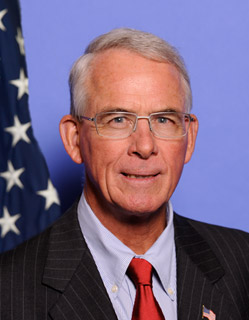
The Honorable Francis Rooney, former U.S. Congressman and Ambassador to the Holy See, discusses the Trump Administration’s foreign policy, the state of U.S.-Vatican relations, and Pope Leo’s Encyclical on Artificial Intelligence.
24 May 2026
Henry Olsen, Senior Fellow at the Ethics and Public Policy Center, a Columnist for the Washington Post, and Author of the Weekly Margin of Victory newsletter, weighs in on this year’s midterm elections, the impact of the Supreme Court’s recent redistricting case, what history teaches us about midterm elections, and what 2028 may look like.
14 May 2026
Jeremy Nighohossian, Senior Fellow and Economist at the Competitive Enterprise Institute, discusses positive developments in healthcare, including changes in drug development, what the resignation of FDA Commissioner Marty Makary may mean for healthcare policy, and why Certificate of Need (CON) laws impede free market competition and access to care.
07 May 2026
Timothy Lee, CFIF’s Senior Vice President of Legal and Public Affairs, discusses newly introduced legislation to shield America’s energy producers from relentless attacks in the form of state-led climate liability lawsuits and other lawsuits, which threaten to undermine American energy dominance.
01 May 2026
Karen Kerrigan, President and CEO of the Small Business and Entrepreneurship Council, discusses the importance of protecting intellectual property (IP) rights to encourage and reward innovation and creativity while ensuring that researchers, inventors, businesses, designers, artist, and society benefit.
24 April 2026
William J. Conti, an attorney from Washington, DC, discusses how the prediction markets are gauging the midterm elections, state redistricting efforts, and the impact the midterm results may have on the 2028 primary and general elections.
16 April 2026
Demian Brady, Vice President of Research for the National Taxpayers Union Foundation, discusses who pays income tax and who doesn’t, the hidden costs of the tax code, Congressional efforts to reduce the complexity of tax filings, and the need to review Congressional pensions for members who resign from Congress in disgrace.
10 April 2026
Janatan Sayeh, Research Assistant at the Foundation for Defense of Democracies, discusses the state of the Iran war, its future trajectory and wider consequences, and what the two-week ceasefire means and what it may (or may not) accomplish.
26 March 2026
Sally Pipes, President and CEO of the Pacific Research Institute, discusses how America’s healthcare system has never been better at keeping patients alive and living longer, types of governmental activities and proposals that disrupt America’s cycle of innovation, and the real drivers of high drug costs in America.
20 March 2026
Lauren Sheets Jarrell, Vice President and Counsel for Civil Justice Policy at the American Tort Reform Association, discusses the Monsanto case before the U.S. Supreme Court, why state courts should not be able to override the EPA’s findings, and how junk science is the scourge of our judicial system.
12 March 2026
Phil Kerpen, Founder and President of American Commitment, discusses America’s energy resurgence, disruptions in the Middle East, and government energy policies that cause more harm than good.
27 February 2026
Ilya Shapiro, Director of Constitutional Studies at the Manhattan Institute, discusses the interplay of the Olympics and geopolitics, how sports are a kind of international diplomacy, and some of the key takeaways from the Milan-Cortina games.
13 February 2026
Karen Kerrigan, President & CEO of the Small Business & Entrepreneurship Council (SBE), discusses why proposed credit card routing mandates and interest rate caps are bad for small businesses and consumers, the importance of travel to the U.S. economy and what steps should be taken to encourage visitors to the U.S.
06 February 2026
Timothy Lee, Senior Vice President of Legal and Public Affairs at the Center for Individual Freedom, discusses how efforts to target companies that sell entertainment tickets is counterproductive, why the free market should win over legislation that distorts the market, and what the recent U.S. Census tells us about the “science of democracy.”
30 January 2026
William J. Conti, an attorney from Washington, DC, discusses the first year of President Trump’s second term as president, how it compares to that of other presidents and what it may mean for the 2026 midterm elections.
Scroll to load more
