




|
|
|


















Load Newer Podcasts







09 January 2025
Ryan Young, Senior Economist and Trade Policy Expert at the Competitive Enterprise Institute, discusses last year’s regulatory highlights (and low points), the regulatory outlook for 2025, including the potential impact of DOGE on the volume of federal regulations, and President Biden’s baseless decision to block Nippon Steel’s purchase of U.S. Steel.
13 December 2024
David Adesnik, Vice President of Research at the Foundation for Defense of Democracies, discusses what’s at stake for the United States in Syria after the fall of the Assad regime, what to expect from the new interim government, what it means for Iran, Israel, Russia and others, and whether we are witnessing the remaking of the Middle East.
05 December 2024
Ilya Shapiro, Senior Fellow and Director of Constitutional Studies at the Manhattan Institute, discusses the unprecedented but not unconstitutional idea of President-elect Trump nominating Supreme Court justices prior to a vacancy, the likelihood of an upcoming retirement of a current justice, the current caseload of the Court, and his new book, "Lawless: The Miseducation of America's Elites."
22 November 2024
William J. Conti, Attorney from Washington, D.C., discusses 2024 election results, whether President Biden bears some of the blame for the Democratic loss, and what the Trump administration will ultimately look like in his second term.
15 November 2024
Sally Pipes, President and CEO of Pacific Research Institute, discusses pressing healthcare issues for the new administration, including whether to extend the subsidies for individuals purchasing insurance through the Obamacare exchanges, how drug price controls are bad for patients, and more.
08 November 2024
Timothy Lee, Senior Vice President of Legal and Public Affairs at the Center for Individual Freedom, discusses a to-do list that the Trump-Vance Administration should address upon entering office, including issues related to the border, inflation, tech policy, intellectual property protection, antitrust policy, and reducing the regulatory suffocation that has existed under the Biden-Harris Administration.
01 November 2024
Tiger Joyce, President of the American Tort Reform Association (ATRA), discusses the excessive tort costs harming small businesses, jobs and economic growth, which states are judicial hellholes and which are models for sensible tort laws, why third party litigation financing is the single greatest change for the worse in the litigation system today, and what voters should look for in candidates when it comes to supporting a balanced justice system.
24 October 2024
Phil Kerpen, President of American Commitment, discusses a recently filed lawsuit seeking emails on why the American Academy of Pediatrics backtracked in 2020 on supporting schools reopening in the fall of 2020, the role of the teachers unions, and the potential political motivation behind the reversal.
18 October 2024
Ryan Young, Senior Economist at the Competitive Enterprise Institute, discusses how Hurricane Helene and Hurricane Milton relief efforts are being hindered by regulations, including those relating to delivery of necessary emergency supplies, occupational licensing laws limiting access to home builders and healthcare workers, and how lessons learned during the COVID pandemic remind us of why unnecessary and counterproductive regulations should be eliminated.
24 September 2024
Hans von Spakovsky, Senior Legal Fellow in the Heritage Foundation's Edwin Meese III Center for Legal and Judicial Studies, discussed the election process and state election reforms, President Biden's attempt to control the Supreme Court, and controversial cases coming before the Court in the October 2024 term.
20 September 2024
Quin Hillyer, Deputy Commentary Editor for the Washington Examiner, discusses the genius of the U.S. Constitution, the need to improve civics and government teachings in our schools, and the importance of addressing the national debt in this year's presidential campaign.
13 September 2024
In an interview with CFIF, William Conti, an attorney in Washington, D.C., discusses the first debate between former President Trump and Vice President Harris, the impact of endorsements, the status of the fight for the Senate in 2024, and the Republican bench looking forward to 2028.
02 September 2024
Sally Pipes, Founder and President of Pacific Research Institute, discusses the impact of drug price controls under the Inflation Reduction Act (IRA), what it means for research and development of life-saving medicines, and how the IRA's drug pricing provisions will reduce access to new cures and treatments and result in longer wait times for existing medicines.
01 September 2024
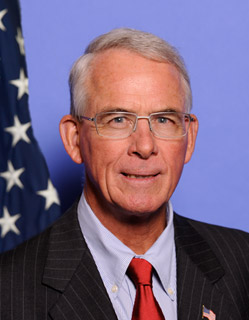
Ambassador Francis Rooney, former U.S. Congressman (R-FL) and former Ambassador to the Holy See, discusses steps the next U.S. president should take to protect our nation and promote America's interests across the globe, the biggest threats to American foreign policy, and a comparison of the foreign policy records of the Biden-Harris Administration and the Trump Administration.
16 August 2024
Timothy Lee, CFIF's Senior Vice President of Legal and Public Affairs, discusses the recent decision by the U.S. Court of Appeals for the Sixth Circuit to put a hold on the FCC's Title II Net Neutrality rules, and how history has proven that the consequences of Title II Net Neutrality are disastrous and immediate.
Scroll to load more
