




|
|
|
















Load Newer Podcasts









06 January 2023
Virginia Allen, Senior News Producer and Host of the Daily Signal Podcast and Problematic Women, discusses what lies ahead for America’s schools, commentary from Former HUD Secretary and renowned neurosurgeon Ben Carson, and what we should expect from the 118th Congress.
16 December 2022
William J. Conti, Partner in the Washington, DC, Office of Baker & Hostetler, discusses the outcome of the midterm elections, how incumbency skews the numbers, Minority Leader McCarthy's chances to become House Speaker, Senator Sinema's switch to Independent, and the politics of the prisoner swap.
09 December 2022
Lance Izumi, Senior Director of the Center for Education at the Pacific Research Institute, discusses why student test scores are plunging, how Congress can improve education, and the role teachers' unions and government regulations play in our schools and education systems.
01 December 2022
Ryan Young, Senior Fellow at the Competitive Enterprise Institute, discusses the numerous ridiculous regulations coming out of the Biden Administration on a weekly basis, how labor unions are taking a short-term view on the proposed Kroger/Albertsons merger, and why we need to be educated on how "money supply" is impacting inflation numbers.
01 December 2022
Marian Tupy, Senior Fellow at the Cato Institute and Co-Author of "Superabundance: The Story of Population Growth, Innovation, and Human Flourishing on an Infinitely Bountiful Planet." discusses his book, how data debunks the belief of a crisis of resource scarcity, and why population growth is not a problem but a solution.
17 November 2022
Tzvi Kahn, Research Fellow and Senior Editor at the Foundation for Defense of Democracies, discusses the ongoing street protests in Iran, the need to impose additional punitive measures on the current regime, and the vectors of support America must demonstrate to the Iranian people.
10 November 2022
McKenzie Richards, Policy Associate at the Pacific Research Institute, discusses simple solutions that can improve care and encourage healthcare services to be more "neighborhood-oriented," from improving telehealth options to getting rid of monopolistic "Certificate of Need" laws, and more.
04 November 2022
Timothy Lee, Senior Vice President of Legal and Public Affairs at the Center for Individual Freedom, discusses the U.S. Court of Appeals for the Fifth Circuit's recent decision ruling the Consumer Financial Protection Bureau's (CFPB) funding scheme to be unconstitutional, why the payday lending rule violates the Constitution's separation of powers, and how Congress created the agency that has too much unaccountable power.
27 October 2022
Dakota Wood, Senior Research Fellow at The Heritage Foundation's Davis Institute for National Security and Foreign Policy, discusses Heritage's recently released "2023 Index of Military Strength", how the United States compares to China, Iran and Russia, where our nation is least ready today from a military perspective, and why young adults need to discover the nobility of serving their country.
19 October 2022
William J. Conti, a Partner with Baker & Hostetler in Washington, DC, discusses the midterm elections, the biggest races, potential surprises and fallout, and a look ahead to 2024.
13 October 2022
Sally Pipes, President and CEO of Pacific Research Institute, discusses the likely disastrous effects of drug price control provisions contained in the Inflation Reduction Act and why Congress should embrace a free-market vision when it comes to healthcare by lowering taxes, encouraging innovation and expanding access.
07 October 2022
Ilya Shapiro, Director of Constitutional Studies at the Manhattan Institute, discusses what to look for in the new Supreme Court term that opened this week, most notably cases related to property rights, affirmative action, and immigration law, and insight into the recently filed case challenging President Biden’s student loan forgiveness plan.
28 September 2022
Lindsey Burke, Director of the Center for Education Policy at The Heritage Foundation, discusses President Biden's plan to cancel student debt for some borrowers, the Congressional Budget Office's recent $400 plus billion cost estimate, and why the plan is on shaky legal grounds.
22 September 2022
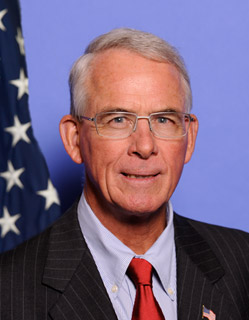
The Honorable Francis Rooney, Former Member of the U.S. House of Representatives and Former U.S. Ambassador to the Holy See, discusses Pope Francis and Russia's war against Ukraine, and why Pope Francis is being criticized for being too lenient and naive toward Russian and Chinese leaders.
16 September 2022
Phil Kerpen, Founder and President of American Commitment, discusses provisions regarding drug price controls that are contained in the so-called "Inflation Reduction Act" that will negatively impact American's access to necessary drugs and harm innovation, and why the legislation may be unconstitutional.
Scroll to load more
