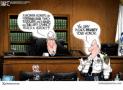
America as we know it was built largely upon and because of our rail industry, and today it remains…
CFIF on X CFIF on YouTube
So-Called "Railway Safety Act" Constitutes a Political Handout to Big Labor That Does Nothing to Improve Safety At All

America as we know it was built largely upon and because of our rail industry, and today it remains a pillar of our economy.

Unfortunately, a destructive proposal before Congress misleadingly named the "Railway Safety Act" (RSA), part of broader surface transportation reauthorization, threatens great harm to our railroads.

Simply put, the bill has nothing to do with improving safety, but has a lot to do with advancing the political agenda of Big Labor.  At a moment when inflation burdens American families and fragile supply chains remain vulnerable to disruption, the last thing our economy or rail sector need is another costly federal mandate imposed upon one of the nation’s most important transportation sectors.

As an initial matter, as noted by The Wall Street Journal, the…[more]

May 20, 2026 • 04:28 PM
Press Releases
CFIF Applauds Live Nation/DOJ Settlement as Victory for Free Markets and Pragmatism Print E-mail
Tuesday, March 10 2026

WASHINGTON, D.C. – The Center for Individual Freedom (CFIF) today welcomed news that the United States Department of Justice (DOJ) has settled with Live Nation Entertainment to end its ill-advised antitrust lawsuit against the company.  The settlement constitutes a constructive outcome demonstrating how negotiation and market-oriented solutions can achieve meaningful improvements without the disruption and uncertainty of heavy-handed federal intervention.

“This settlement underscores an important point that when government regulators allow practical solutions to emerge through negotiation and voluntary agreement, consumers, businesses and artists alike win," said CFIF Senior Vice President of Legal and Public Affairs Timothy Lee. 

The lawsuit alleged competitive concerns in the concert promotion and ticketing marketplace, but the case faced early skepticism and some claims were dismissed, while remaining claims faced considerable legal uncertainty. Accordingly, rather than pursuing a prolonged courtroom battle consuming years and millions of dollars in legal costs, the DOJ chose the more sensible path:  Resolve the dispute through negotiated reforms that address concerns while allowing the marketplace to keep functioning.  Thus, the settlement includes measures designed to increase flexibility and transparency in concert promotion and ticketing arrangements, while Live Nation amphitheaters will operate as open venues available to outside promoters.  The arrangement also places reasonable limits on ticketing service fees and expands opportunities for venues to consider different ticketing partners where appropriate.  

“Those arrangements constitute precisely the sort of pragmatic solutions that markets and private negotiation can produce,” Lee continued.  “They enhance choice and transparency without resorting to sweeping structural mandates or the counterproductive breakup of successful American companies." 

Importantly, the settlement resolves the federal government’s claims without any admission of wrongdoing by Live Nation, and preserves its ability to continue operating and investing in the live entertainment industry while providing assurances sought by regulators.  

“CFIF also emphasizes that this outcome also reflects the broader economic philosophy advanced by Donald Trump and his administration:  Dealmaking and negotiation produce better results than rigid bureaucratic dictates," said Lee.  "President Trump believes that negotiation and practical compromise succeed where government overreach fails, and this agreement embodies that philosophy.  Rather than attempting to micromanage a complex and rapidly evolving entertainment marketplace, policymakers allowed the parties to reach a workable arrangement that preserves competition while respecting the realities of the industry.  

“The live entertainment sector remains among the most dynamic segments of the American entertainment economy, supporting thousands of artists, venues, promoters and service providers across the country.  Heavy-handed regulatory action would only introduce significant uncertainty into that ecosystem, potentially discouraging future investment and innovation.  

“CFIF encourages policymakers to view the settlement as a reminder that not every marketplace concern requires sweeping regulatory intervention.  It once again proves that negotiated, free-market resolutions deliver solutions where bureaucracy and litigation would have only delivered delay,” Lee concluded.  

CFIF is a constitutional and free-market advocacy organization with over 300,000 supporters and activists nationwide.  

###


Page 6 of 303
Notable Quote   
 
"As home values skyrocket, taxpayers grow increasingly frustrated with 'dinner table issues' such as confidence in a secure financial future and anxiety over 'affordability.' Republican-led states enjoy budget surpluses, as a new trend of eliminating property taxes is emerging in red states.On Tuesday, the Florida State Legislature approved a November ballot measure that would abolish property taxes…[more]
 
 
— Amanda Head, Just the News
 
Liberty Poll   

In a time of growing national economic stress, should the Artemis moon missions, expected to ultimately cost taxpayers more than $100 billion, be continued or postponed?