September 22nd, 2017 at 1:55 pm
Air Traffic Control Proposal: Making Airlines Tax Collectors?
Posted by Print

Beware policy proposals waving the “privatization” banner that don’t constitute true privatization at all, and threaten to actually worsen the situation.

The latest example:  Efforts to restructure the U.S. air traffic control system, which would likely repeat the mistakes of such federal boondoggles as Amtrak and the U.S. Post Office.

Alongside numerous other conservative and libertarian organizations, CFIF has maintained serious concerns over H.R. 2997, the “21st Century AIRR Act.”  Those concerns include, among other flaws:

  • Greater empowerment of air traffic controller unions, by maintaining centralized monopoly power over air traffic control while expanding their authority over such matters as personnel changes, salary caps and mandatory retirement age (currently at age 56, compared to 65 for pilots), which explains why the unions favor the proposal;
  • It would increase the U.S. budget deficit by $20 billion between 2017 and 2026, according to the Congressional Budget Office (CBO) itself;
  • The U.S. Department of Defense recently weighed in to say, “The establishment of a new entity separate from the FAA raises serious concerns regarding the disposition of certain unique National Defense procedures, programs and policy,” adding that, “it is significant to note that the DoD relies on FAA ‘command and control’ capabilities in the execution of the national defense mission”;
  • The proposed replacement air traffic control entity would possess authority to impose new taxes and user fees without Congressional oversight, meaning higher costs for American consumers, which is far from the sort of market competition that true “privatization” would offer.

On that latter point, Andrew Langer of the Institute for Liberty raises an ominous concern in his recent commentary in The Washington Times:

[W]e’ve been told that the new entity will be self-funded, in this case by a user fee.  As always, I’m skeptical taxpayers won’t ultimately have to bail out a GSE, but with the ATC proposal, it’s really about control.  Proponents have made clear that their real motivation is to shift the tax burden to other segments of the industry.  Ian Adams, a proponent of separating ATC, recently argued that it would reallocate the tax burden among the ‘fees its users pay,’ including general aviation.

The only privatization will be that the authorization and taxing authority of Congress will be supplanted by authority of one segment of an industry to tax another with no oversight.  If the airlines were granted more monopoly power and gained taxing authority from Congress, they have shown time and again that they would abuse that power.  They have increased their fees on passengers by over $7 billion.  Now they want to phase out their fuel and excise tax for a flat user-fee tax that would get levied disproportionately at economy class passengers.  I’m always in favor of getting rid of taxes, but this is a tax by another name, without the political accountability to keep it from rising in perpetuity.

And, since there would be no accountability from anyone to stop it or make sure this entity is being managed properly, it’s a safe bet that ultimately all taxpayers will pay more in the form of a bailout.”

That is among the reasons the American Conservative Union Foundation (ACUF) last week announced its opposition to the proposed restructuring, saying that it, “would gladly stand in support of true policy efforts to privatize our air traffic control system that better reflect the ideals of privatization – those that align with a more robust free market and exhibit a true transfer of power from public to private hands.”

Well said.  At this point, the proposal simply doesn’t amount to the type of true privatization that merits support from conservatives and libertarians across America.

September 20th, 2017 at 10:12 am
Ramirez Cartoon: National Anthem Protests
Posted by Print

Below is one of the latest cartoons from two-time Pulitzer Prize-winner Michael Ramirez.

View more of Michael Ramirez’s cartoons on CFIF’s website here.


September 18th, 2017 at 12:19 pm
Great News: Americans Overwhelmingly Oppose Internet Sales Tax 66% to 21%
Posted by Print

For a long list of reasons that we’ve consistently highlighted, an internet sales tax allowing state authorities to tax people and businesses far beyond their borders is a destructive, indefensible idea.

On that front, there’s great news to report.  According to a fresh Rasmussen survey, this is one of those encouraging areas where fairness, policy wisdom and public opinion are in accord:

.

A majority of Americans do at least some shopping online, and they are not fans of taxing those purchases.  A new Rasmussen Reports national telephone and online survey finds that 66% of American adults oppose a sales tax in their state on items purchased online, even if the store they buy from is not in their state.  Just 21% favor an internet sales tax, while 13% are not sure.”

.

As much-needed comprehensive tax reform negotiations begin in Washington, some are advocating allowing an internet sales tax under the false banner “Marketplace Fairness Act” as part of the deal.  It’s encouraging to see that American voters aren’t buying it, no pun intended.


September 11th, 2017 at 2:52 pm
Free Market Groups Urge Support for “Free File Permanency Act”
Posted by Print

The Center for Individual Freedom (CFIF) last week joined with nearly 20 free-market organizations to urge support for H.R. 3641, the Free File Permanency Act.

The letter, which was organized by Americans for Tax Reform, was addressed to House Ways and Means Tax Policy Subcommittee Chairman Peter Roskam (R-IL).

Read the letter here.


September 11th, 2017 at 1:56 pm
This Week’s “Your Turn” Radio Show Lineup
Posted by Print
Join CFIF Corporate Counsel and Senior Vice President Renee Giachino today from 4:00 p.m. CDT to 6:00 p.m. CDT (that’s 5:00 p.m. to 7:00 p.m. EDT) on Northwest Florida’s 1330 AM WEBY, as she hosts her radio show, “Your Turn: Meeting Nonsense with Commonsense.” Today’s guest lineup includes:

4:00 CDT/5:00 pm EDT: Ted Frank, Senior Attorney, Director of the Center for Class Action Fairness at the Competitive Enterprise Institute: Subway and Do Americans Need More lawsuits?;

4:15 CDT/5:15 pm EDT: Thomas Callender, Senior Research Fellow for Defense Programs at The Heritage Foundation: Can the U.S. Navy Do More with Less?;

4:30 CDT/5:30 pm EDT: Charles Murray, W.H. Brady Scholar at the American Enterprise Institute and Author: Free Speech on College Campuses;

4:45 CDT/5:45 pm EDT: Michael Steel, Managing Director at Hamilton Place Strategies: The Need for Transformative Tax Reform;

5:00 CDT/6:00 pm EDT: Robert Alt, President and Chief Executive Officer at the Buckeye Institute: Worker Voting Rights and Keeping Donors Off Government Lists;

5:15 CDT/6:15 pm EDT: Dr. John Eastman, Professor, Henry Salvatori Professor of Law and Community Service at Chapman University: DACA; and

5:30 CDT/6:30 pm EDT: Rowena Itchon, Senior Vice President at the Pacific Research Institute: Interns, Non-profits and Minimum Wage.

Listen live on the Internet here. Call in to share your comments or ask questions of today’s guests at (850) 623-1330.

September 8th, 2017 at 1:32 pm
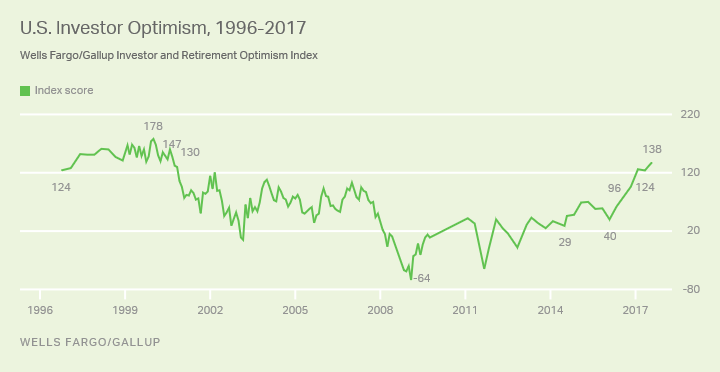
Image of the Day: U.S. Investor Confidence Reaches Highest Point Since 2000
Posted by Print

From Gallup, confidence among American investors reaches its highest point since 2000.

Sidenote:  What explains that dramatic upward jolt from 40 in November of last year to 134 today?  We’ll probably never know.

American Investor Confidence Jumps

American Investor Confidence Jumps


September 7th, 2017 at 10:37 am
CFIF Joins Coalition of Conservative Orgs Urging Congress to Pass Pro-Growth Tax Reform
Posted by Print

The Center for Individual Freedom (“CFIF”) yesterday joined with more than 20 leading conservative organizations on a letter urging Congress to pass historic, pro-growth tax reform.

The letter, which was organized by American Action Network’s Middle-Class Growth Initiative, reads in part:

“The outdated U.S. tax code, last overhauled more than three decades ago, has rendered American job creators less competitive in the global marketplace, slowed the growth of wages, and discouraged investment in local communities across our country. We write to urge you to support meaningful, transformative tax reform that will strengthen economic growth and enable greater prosperity for America’s job creators and middle-class families.”

Read the full letter here.

Tags: ,

September 5th, 2017 at 3:42 pm
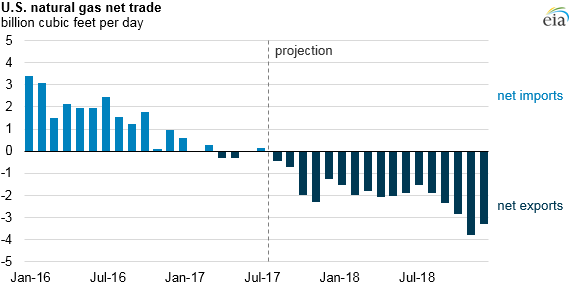
Image of the Day: Drill, Baby, Drill
Posted by Print

Remember when leftists lectured Americans that we couldn’t drill our way to energy independence?

On May 27, 2010, Barack Obama preened, “You never heard me say, ‘Drill, baby, drill.  Because we can’t drill our way out of the problem.”

Well…

.

U.S. Becomes Net Exporter

U.S. Becomes Net Exporter

.


September 1st, 2017 at 2:54 pm
Ramirez Cartoon: United
Posted by Print

Below is one of the latest cartoons from two-time Pulitzer Prize-winner Michael Ramirez.

View more of Michael Ramirez’s cartoons on CFIF’s website here.


August 28th, 2017 at 2:53 pm
This Week’s “Your Turn” Radio Lineup
Posted by Print

Join CFIF Corporate Counsel and Senior Vice President Renee Giachino today from 4:00 p.m. CDT to 6:00 p.m. CDT (that’s 5:00 p.m. to 7:00 p.m. EDT) on Northwest Florida’s 1330 AM WEBY, as she hosts her radio show, “Your Turn: Meeting Nonsense with Commonsense.” Today’s guest lineup includes:

4:00 CDT/5:00 pm EDT:  Nan Swift, Federal Affairs Manager for the National Taxpayers Union – Renewable Fuel Standards and ObamaCare;

4:15 CDT/5:15 pm EDT:  Sarah Westwood, White House Reporter for The Washington Examiner – President Trump and the Republicans;

4:30 CDT/5:30 pm EDT:  Trey Kovacs, Policy Analyst at the Competitive Enterprise Institute – Obama Overtime Rule and Compulsory Union Dues;

5:00 CDT/6:00 pm EDT:  William Conti, Partner at Washington, DC. Office of Baker & Hostetler – Inside Politics; and

5:30 CDT/6:30 pm EDT:  Timothy Lee, CFIF’s Senior Vice President of Legal and Public Affairs – Local Business Act and Affirmative Action.

Listen live on the Internet here. Call in to share your comments or ask questions of today’s guests at (850) 623-1330.


August 25th, 2017 at 4:57 pm
California’s Proposed “Internet Privacy” Bill Is Nothing of the Sort
Posted by Print

An unfortunate byproduct of life in a democratic system is that complex policy matters are often reduced to simplistic slogans, and politicians exploit attractive terms to peddle harmful proposals.

California offers a textbook example, where legislators are pushing something called the “California Broadband Internet Privacy Act” (A.B. 375) in the name of “protecting consumer privacy.”

The reality is far different.  In truth, the bill constitutes crony capitalism on behalf of some industries at the expense of others, and would stifle innovation and undermine rather than boost consumer welfare.

This battle was already fought and won at the federal level, when Congress employed the Congressional Review Act to rescind an Obama Federal Communications Commission (FCC) rule to the same effect.

Supporters of the proposed legislation will tell you that it’s necessary to protect consumers against internet service providers who seek to gather and sell private information.  In that vein, the bill would require that consumers “opt in” before service providers could use their data to improve service or tailor advertising to consumer preferences or needs.  Current law, however, already allows consumers to “opt out” from collection of non-sensitive data if they choose.  Notably, few consumers choose to do so, because that would interfere with their ability to enjoy more customized online service that they prefer.

It’s also important to note that current law also already requires that consumers “opt in” to allow access to particularly sensitive personal information.

So what the proposed law would do is impose a one-size-fits-all mandate that most customers currently don’t choose.

Secondly, the Federal Trade Commission (FTC) already possesses authority to protect consumers against privacy violations and punish improper data collection should it occur.  That’s how the system has worked for over two decades while the internet flourished like no innovation in human history.  And that’s why the FTC expressed opposition to this sort of “privacy” legislation at the federal level before it was quashed.  California’s attorney general is also empowered to investigate and seek legal remedy for “unlawful, unfair or fraudulent business acts or practices” under California’s Unfair Competition Law.

Even former Democratic California Congressman Henry Waxman observed that this type of law would “undermine beneficial uses of data” and “could result in tangible competitive and consumer harm.”

Another flaw in the bill is that it conspicuously exempts powerful content companies like Google, which obviously earn their billions by monetizing consumer data for purposes of advertising and sales.  Those content companies access customer personal information just as much as service providers, if not more.  After all, consumers tend to access the internet via different devices and networks, whereas they tend to use the same search engines (i.e., Google) and visit the same content sites.

Accordingly, the proposed bill amounts to crony capitalism benefitting one set of companies at the expense of another set.

California’s proposed law would create the additional problem of imposing burdens that other states don’t impose, thereby creating a “spaghetti bowl” regulatory effect for companies that offer nationwide products and services.

Online privacy remains a natural and important concern for consumers in California and across America.  But we must also beware politicians pushing laws that undermine consumer welfare, threaten the thriving internet sector and amount to crony capitalism by picking winners and losers in the marketplace.


August 23rd, 2017 at 10:20 am
Broadcasters’ “Next Gen” Proposal to FCC Would Cost Consumers
Posted by Print

The new Federal Communications Commission (FCC) has been one of the most consistently outstanding agencies of the Trump Administration in terms of restoring regulatory sanity after eight years of politicized abuse throughout the Obama Administration.

Unfortunately, the FCC remains under assault from groups seeking to leverage federal policy toward its own advantage, and continued vigilance is critical.

In just the latest illustration, broadcasters have begun pressuring the FCC to allow television stations to begin transmitting signals in a new “ATSC 3.0” format.  Also referred to as “Next Gen,” such a transition would impact every American consumer who watches television, and not necessarily for the better.  In addition to costing taxpayers, it could create a de facto federal mandate on television service providers.

First, the ATSC 3.0 format is incompatible with existing televisions and set-top boxes, meaning that Americans who wanted to simply continue watching television would have to purchase new equipment or join a pay-TV provider that had spent the time and money transitioning its equipment.  That, of course, would be a cost transferred to customers.

Second, the proposed transition could also mean weaker signals for consumers who choose over-the-air broadcast.  That’s because it would involve simulcasting from facilities with smaller or new coverage areas, placing rural voters in particular jeopardy.

Additionally, ATSC 3.0 could bring more dreaded blackouts, since broadcasters could seek to force pay-TV providers to carry ATSC 3.0 signals under threat of blackout (a tactic broadcasters have exploited in the past on behalf of such efforts as ratcheting up retransmission fees).  Accordingly, broadcasters can leverage their government-provided bargaining position to obtain higher fees for themselves via threat of consumer blackouts, which they’ll surely employ in their effort to force consumers and providers to purchase the new equipment necessary for reception.

That, of course, translates to higher costs for consumers, or giving up their favored programming altogether.

The better alternative is to let market forces work, by making the Next Gen transition wholly voluntary.  Broadcasters operate under an umbrella of government license, which allows them to hold consumers hostage in order to increase revenues.  Accordingly, the FCC should continue its good works by rejecting broadcasters’ attempt to leverage federal bureaucracy to achieve a new government handout to be subsidized by consumers.  Next Gen should be a truly voluntary standard that doesn’t leave consumers holding the bill for the broadcasters’ innovation.


August 18th, 2017 at 1:51 pm
Image of the Day: A Powerful Tribute to Free Market Capitalism
Posted by Print

Economist Deirdre McCloskey will soon release her new book entitled “Bourgeois Equality:  How Ideas, Not Capital or Institutions, Enriched the World.” It it, she describes the unprecedented transformation  and improvement of human wellbeing through the power of economic freedom, as illustrated by this graph:

.

The Power of Free Markets

The Power of Free Markets

.

As McCloskey summarizes, that’s the result of the free market revolution:

.

[I]n the two centuries after 1800, the trade-tested goods and services available to the average person in Sweden or Taiwan rose by a factor of 30 or 100.  Not 100 percent, understand – a mere doubling – but in its highest estimate a factor of 100, nearly 10,000 percent, and at least a factor of 30, or 2,900 percent.  The Great Enrichment of the past two centuries has dwarfed any of the previous and temporary enrichments.  Explaining it is the central scientific task of economics and economic history, and it matters for any other sort of social science or recent history…

The modern world was made by a slow-motion revolution in ethical convictions about virtues and vices, in particular by a much higher level than in earlier times of toleration for trade-tested progress – letting people make mutually advantageous deals, and even admiring them for doing so, and especially admiring them when Steve Jobs-like they imagine betterments.  The change, the Bourgeois Revaluation, was the coming of a business-respecting civilization, an acceptance of the Bourgeois Deal:  ‘Let me make money in the first act, and by the third act I will make you all rich.'”

.

It’s something for which we should all remain grateful, and hopefully more readily defend against the eternal onslaught of statism.


August 15th, 2017 at 10:20 am
Rationing in Venezuela
Posted by Print

Below is one of the latest cartoons from two-time Pulitzer Prize-winner Michael Ramirez.

View more of Michael Ramirez’s cartoons on CFIF’s website here.


August 14th, 2017 at 4:34 pm
This Week’s “Your Turn” Radio Lineup
Posted by Print

Join CFIF Corporate Counsel and Senior Vice President Renee Giachino today from 4:00 p.m. CDT to 6:00 p.m. CDT (that’s 5:00 p.m. to 7:00 p.m. EDT) on Northwest Florida’s 1330 AM WEBY, as she hosts her radio show, “Your Turn: Meeting Nonsense with Commonsense.” Today’s guest lineup includes:

4:00 CDT/5:00 pm EDT:  Adam Michel, Policy Analyst with the Thomas A. Roe Institute for Economic Policy Studies at The Heritage Foundation – Tax Reform;

4:15 CDT/5:15 pm EDT:  Angela Logomasini, Senior Fellow at the Competitive Enterprise Institute – Sound Science;

4:30 CDT/5:30 pm EDT:  Tzvi Kahn, Senior Iran Analyst at the Foundation for Defense of Democracies – Iran;

4:45 CDT/5:45 pm EDT:  Phil Kerpen, President of American Commitment – Senator Bob Menendez Trial and Control of the Senate;

5:00 CDT/6:00 pm EDT:  Quin Hillyer; Contributing Editor of National Review magazine, a Senior Editor for The American Spectator magazine and nationally recognized authority on the American Political Process – ObamaCare; and

5:30 CDT/6:30 pm EDT:  Timothy Lee, CFIF’s Senior Vice President of Legal and Public Affairs – Climate Hypocrisy and Al Gore.

Listen live on the Internet here. Call in to share your comments or ask questions of today’s guests at (850) 623-1330.


August 14th, 2017 at 11:45 am
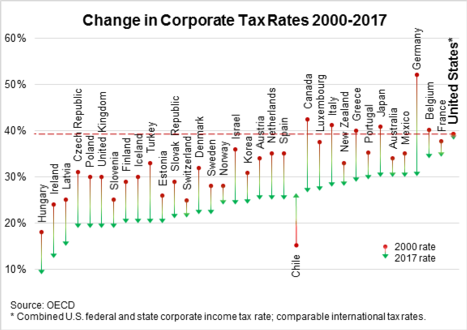
Image of the Day: U.S. Trails on Corporate Tax Reform
Posted by Print

If you’re concerned about headwinds facing American international competitiveness, the first place to isolate and correct the problem is on corporate taxes.  Courtesy of the Senate Joint Economic Committee, this shows in disturbing relief not only how the U.S. maintains the developed world’s highest rate, but also how global competitors continue to move in the right direction and leave us in the dust:

Stagnant U.S. Corporate Tax Rate

Stagnant U.S. Corporate Tax Rate

The good news is that comprehensive tax reform efforts are getting underway on both ends of Pennsylvania Avenue.  It’s been three decades since we achieved significant reform under Ronald Reagan, and we mustn’t blow this golden opportunity.


August 9th, 2017 at 12:12 pm
Image of the Day: Americans Pay Less for Electricity — a LOT Less
Posted by Print

Want to pay a lot more for electricity?

If so, you  can move to Europe and other more righteous “green” economies and make your dreams come true:

Americans Enjoy Lower Electricity Rates

Americans Enjoy Lower Electricity Rates

We recently noted how if most European and other developed nations were U.S. states, they’d be comparatively poor ones.  As we further noted, that’s especially true when one adjusts for comparative cost of living, which the comparison above helps illustrate.


August 4th, 2017 at 12:00 pm
Letter Offers Helpful Historical Perspective on the Israeli/Palestinian Temple Mount Metal Detector Controversy
Posted by Print

After three terrorist gunmen killed two Israeli police officers last month at the Temple Mount outside of Jerusalem’s Old City, Israel installed metal detectors at the entrance of the site to protect both visitors and officers.  Perhaps predictably, those seemingly common-sense measures triggered a call for a “day of rage” from Palestinian leaders, and an ensuing round of violent protests in Palestinian cities.

Today, a reader letter in The Wall Street Journal provides some helpful historical perspective in the ongoing controversy:

It is ironic that the Muslim population complains that the metal detectors interfere with their worship.  Until the Six Day War in 1967, when the Temple Mount was in Muslim control, Jews weren’t allowed to come within miles of the Western Wall, much less pray there.  To this day, Jews aren’t allowed to pray at their holiest site – the summit of the Temple Mount – by the Islamic Waqf.”


July 28th, 2017 at 12:48 pm
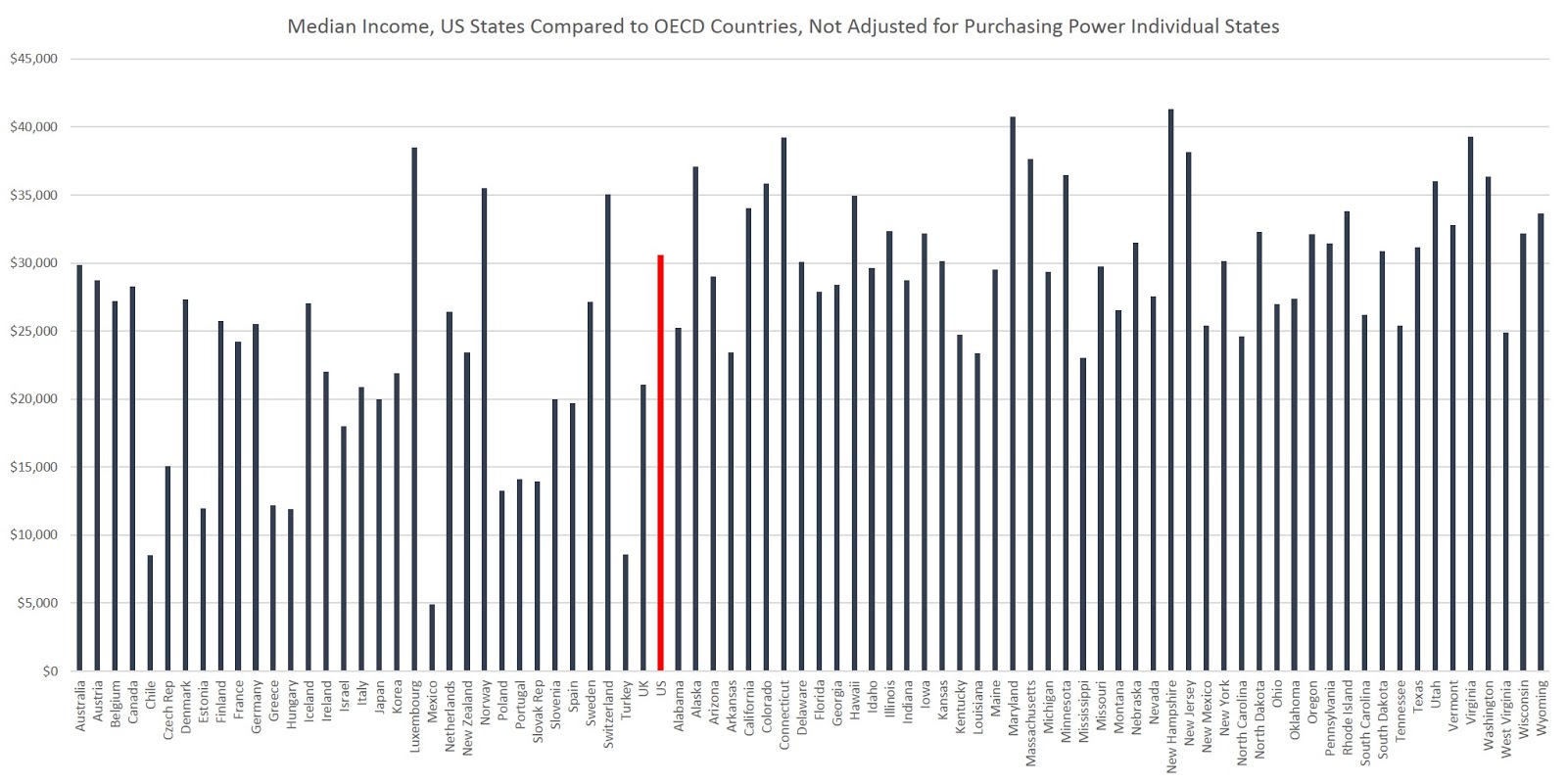
Image of the Day: Almost All European Nations Would Be Poor U.S. States
Posted by Print

From the Mises Institute, a helpful corrective to the strangely persistent myth that life is better in Europe than the United States.  As this graph demonstrates, if European nations were U.S. states, almost all of them would be poor ones.  That also includes Canada, Japan, Australia and New Zealand.

Most European Nations Would Be Poor U.S. States

Most European Nations Would Be Poor U.S. States

Only three nations – Switzerland (which notably has no minimum wage), Luxembourg and Norway – exceed the U.S. median income, and keep in mind that doesn’t account for the far lower cost of living (i.e., purchasing power) in the U.S.  Something to keep handy the next time Bernie Sanders speaks of overseas utopias, or friends on social media instruct us all on some better way of living, as Merle Haggard would say.


July 24th, 2017 at 5:57 pm
CFIF Joins Coalition Urging Congressional Reversal of CFPB’s Anti-Arbitration Rule
Posted by Print

The Center for Individual Freedom (CFIF) today joined a coalition made up of more than two dozen free-market organizations on a letter urging Congress to use the Congressional Review Act to reverse a new rule by the Consumer Financial Protection Bureau (CFPB) that prevents financial services companies from using arbitration to resolve customer disputes.

“The CFPB’s arbitration rule has been described as ‘Christmas in July’ for America’s trial lawyers – and rightly so,” the coalition stresses in the letter.  “According to the CFPB’s own finding, the rule will cost consumers billions of dollars and unleash over 6,000 class action lawsuits every five years. This rule is an obstacle to the efforts to right America’s fiscal ship and create jobs and prosperity for the American people.”

The letter, which was organized by the Center for Freedom and Prosperity, can be read in its entirety here (PDF).

Read the Center for Freedom and Prosperity’s official press release here.